
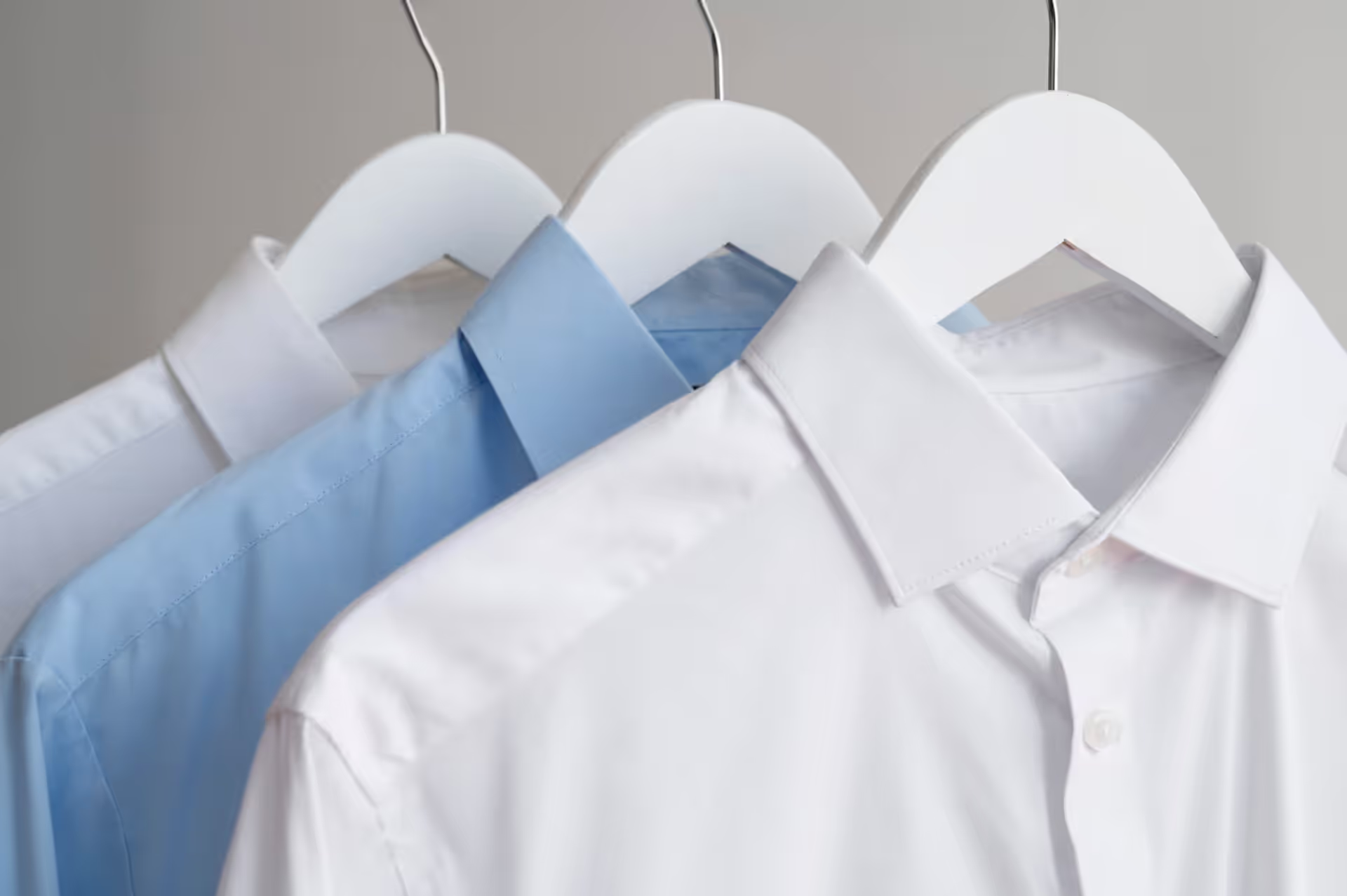
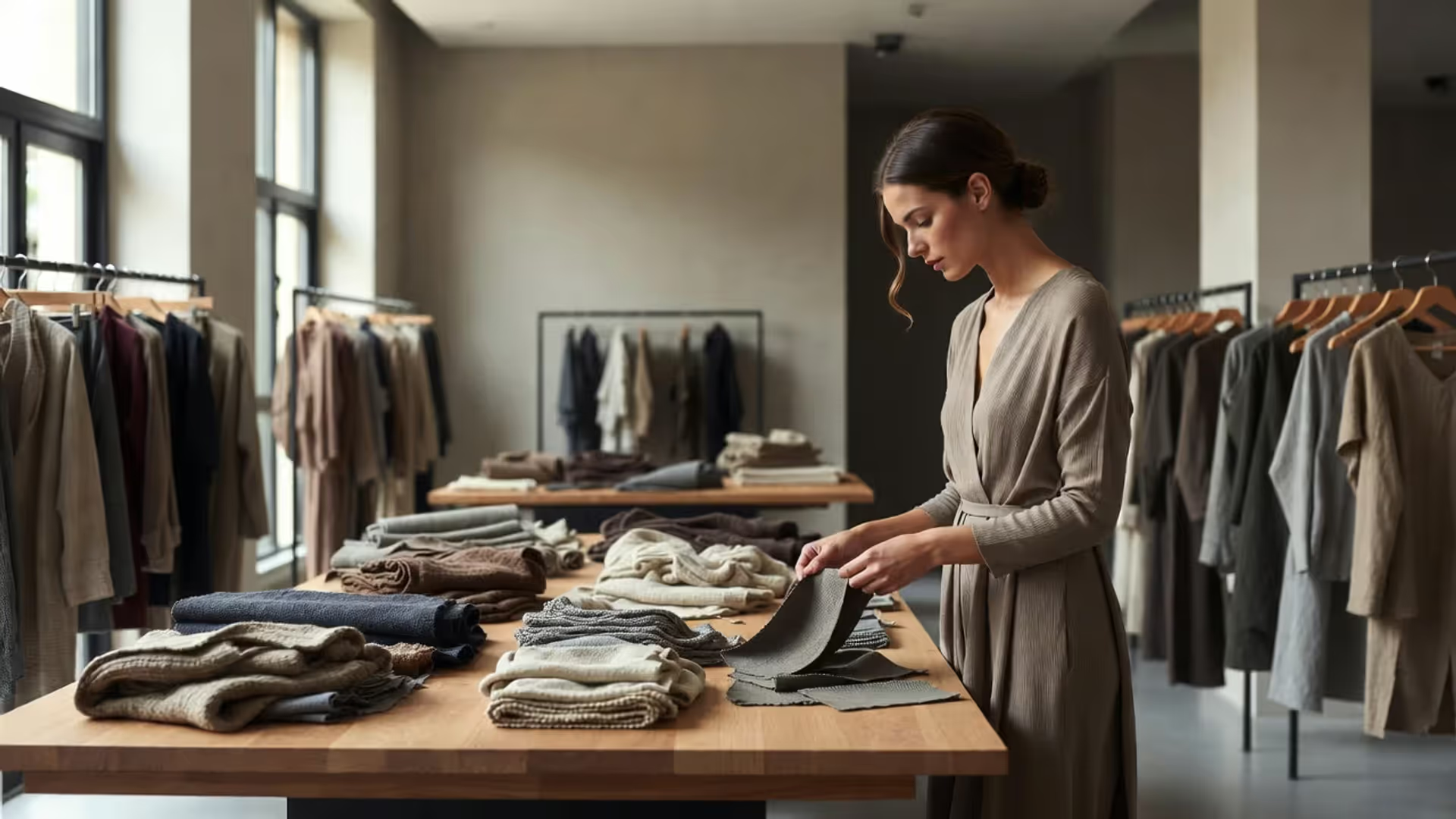
Three tiers of fashion represented through similar garments at different price points, illustrating the visual and quality distinctions between luxury, premium, and mass market options.
Is the Brand Worth It? How to Choose Between Luxury, Premium, and Mass Market

Content
Content
Every thoughtful shopper faces this calculation: is this expensive item actually worth five times—or fifty times—what the cheaper version costs? A cashmere sweater might cost $40 at one retailer and $400 at another—or $2,500 at a luxury house. What justifies these differences? When does spending more make sense, and when are you simply paying for a label? These questions have become increasingly pressing as fashion pricing spans ever-wider ranges. Fast fashion offers trend pieces for less than lunch at Chipotle; luxury houses charge car-payment prices for handbags. The middle ground—premium brands—has expanded to fill the space between these extremes. Navigating these tiers intelligently requires understanding what you're actually paying for at each level.
The honest answer isn't simple. Sometimes expensive items deliver value that justifies their cost. Sometimes they're overpriced status symbols. Sometimes cheap items represent remarkable value. Sometimes they're disposable garbage destined for landfills within months. The skill isn't choosing one tier exclusively but learning to evaluate items within any tier based on what matters: quality, longevity, purpose, and personal value. This guide breaks down what differentiates fashion tiers, how to evaluate whether specific items justify their prices, and how to build a wardrobe that maximizes value across all price points—with specific guidance for American consumers navigating today's complex retail landscape.
Understanding Luxury Fashion: Behind the Prestige
Luxury fashion brands occupy the highest price tier—think Hermès, Chanel, Louis Vuitton, Gucci, Prada, Loro Piana, Brunello Cucinelli, and similar houses. Prices for basics start where premium brands' statement pieces end. A luxury house t-shirt might cost $500; a handbag, $5,000 or significantly more. Understanding what drives these prices reveals whether they make sense for your situation.
You're paying substantially for brand heritage and exclusivity—association with storied houses, often with decades or centuries of history. The brand itself carries cultural value beyond the physical product. When you buy Chanel, you're not just buying a bag—you're buying a connection to Coco Chanel, to Karl Lagerfeld, to a certain vision of Parisian elegance that has permeated American culture since the mid-20th century. Luxury brands invest enormous sums in maintaining their positioning through celebrity partnerships (think Beyoncé for Tiffany, Zendaya for Louis Vuitton), fashion shows in exotic locations, flagship stores on Fifth Avenue and Rodeo Drive, and advertising in Vogue and Harper's Bazaar. These costs embed in the price of every item you purchase.
Top-tier luxury sometimes uses exceptional materials—rare leathers like crocodile and ostrich, high-momme silk, Japanese selvedge denim, Grade A Mongolian cashmere with extra-long fibers. But not universally: some luxury items use materials comparable to premium alternatives while commanding far higher prices. Some luxury items involve genuine artisanal production—hand-stitching by trained craftspeople, specialized techniques passed down through generations, limited production runs that ensure attention to detail. But others are manufactured similarly to premium goods while priced dramatically higher for brand value alone. Limited availability—whether from genuinely constrained production or intentional scarcity—supports premium pricing. The waitlists for Hermès Birkin bags exemplify controlled scarcity as a pricing strategy, creating perceived value through inaccessibility. Certain luxury items, particularly iconic handbags, retain or appreciate in value over time, partially offsetting initial cost for some purchases and transforming them from expenses into quasi-investments. A Chanel Classic Flap purchased in 2015 is worth more today than its original purchase price.
The reality of luxury is that you're paying substantially for intangibles—status, association, the feeling of exclusivity—beyond physical product quality. Whether those intangibles hold value for you personally determines whether luxury makes sense in your situation. For some buyers, the confidence and pleasure derived from luxury ownership genuinely enhances life quality. For others, the same money delivers more value invested in premium quality without the brand premium.
The Premium Sweet Spot and Mass Market Realities
Premium fashion occupies the middle tier—brands like Theory, Vince, AllSaints, Reiss, Sandro, Equipment, COS, Massimo Dutti, Club Monaco, J.Crew at full price, and Banana Republic's higher-end offerings. Prices exceed mass market but remain accessible compared to luxury. A premium brand sweater might run $150-400; outerwear, $400-800. Premium brands typically use higher-quality fabrics than mass market—finer gauge knits, better cotton often from Pima or Supima varieties, quality leather, decent silk. The material difference is usually tangible both tactilely and visually. You'll find more attention to seaming, finishing, and durability—not artisanal handcraft, but solid manufacturing standards that produce longer-lasting garments with more stitches per inch, more careful edge finishing, and better hardware throughout.
“The biggest pricing myth in fashion is that cost directly correlates to quality. It often does—but not always, and not linearly. A $200 sweater might be twice the quality of a $100 sweater. But a $2,000 sweater is rarely twenty times better. Understanding where the value inflection points are helps you spend intelligently rather than either overpaying or accepting poor quality.”
Premium represents the value-focused tier for many American shoppers: meaningful quality improvement over mass market without luxury's substantial brand premium. The quality-to-price ratio often peaks in this range, making it the sweet spot for building a lasting wardrobe. Some premium in pricing covers brand image and marketing, though less dramatically than luxury—perhaps 15-30% of price versus 50% or more at luxury level. Premium brands also maintain nicer stores (think Nordstrom rather than Target), better customer service, and more pleasant shopping experiences than mass market, with these costs appearing in pricing.
Mass market fashion includes both traditional retailers like H&M, Zara, Uniqlo, Gap, Old Navy, and Target's fashion offerings, plus ultra-fast fashion from Shein, Temu, and Fashion Nova. Prices anchor low—sweaters for $20-50, outerwear for $50-150. These prices result from massive production volumes spreading fixed costs across millions of units, lower-grade fabrics and synthetic blends keeping input costs minimal, streamlined manufacturing prioritizing speed and efficiency over craftsmanship, and reduced overhead through less expensive retail locations and minimal customer service. Mass market serves legitimate purposes: accessible fashion for budget-constrained shoppers, trend experimentation without commitment, and basics where quality differences matter less. But mass market's low prices often reflect genuinely lower quality and shorter useful life—the $30 sweater that pills after three washes isn't actually cheaper than the $150 sweater worn for five years when you calculate the true cost.
What You're Actually Paying For: Breaking Down the Price
Raw materials represent only a fraction of final price, but differences matter significantly across tiers. Luxury materials include the finest cashmere with extra-long fibers, rare leather varieties, high-momme silk at 19mm and above, and Japanese selvedge denim with hand-finished edges. These materials cost substantially more wholesale and provide genuine quality differences in durability, tactile experience, and how they look after years of wear. Premium materials offer good-quality cashmere often blended but at decent grade, quality leather, decent silk at 14-16mm, and quality cotton from long-staple varieties like Pima and Supima—a tangible step up from mass market in most categories. Mass market materials substitute acrylic for wool, polyester for silk, bonded leather for full-grain, and thin cotton from short-staple varieties—adequate for function but noticeably inferior in feel, appearance, and durability. The gap between premium and luxury materials is often narrower than pricing suggests, while the gap between premium and mass market represents genuine, tangible difference worth paying for in categories where material quality affects daily experience.
Author: freepik.com;
Source: https://www.freepik.com/
How garments are assembled affects durability, appearance, and fit substantially. Luxury construction at its best features hand-finishing, precise seaming, quality interlinings, careful pattern matching, and details requiring skilled labor—seams finished with specialized techniques, buttons attached in specific ways for durability. But luxury construction quality varies significantly, with some houses reducing manufacturing standards while maintaining prices and outsourcing to the same factories premium brands use. Premium construction offers machine manufacturing with better quality control than mass market, typically 10-12 stitches per inch versus 6-8 at mass market, along with better finishing and more attention to fit—solid but not exceptional. Mass market construction optimizes for speed and cost with fewer stitches, simplified seaming, and minimal finishing that appears adequate when new but often degrades with washing and wear as seams start separating, fabric pills, and shape is lost.
The portion of price attributable purely to brand name varies dramatically across tiers. Luxury brand premium is substantial—often 50% or more of price reflects brand value rather than product quality, meaning you're paying for status, heritage, and association. A Gucci logo t-shirt for $500 isn't fifty times the quality of a $10 basic. Premium brand premium is moderate at perhaps 15-30% of price covering positioning and marketing, with the balance tilting more toward actual product value. Mass market brand premium is minimal since most mass market brands compete primarily on price, though some like Zara command slight premiums for perceived fashion currency.
| Cost Component | Luxury | Premium | Mass Market |
| Materials | High (sometimes exceptional) | Good | Adequate/Low |
| Construction | Variable (sometimes excellent) | Solid | Basic |
| Design | High investment | Moderate investment | Minimal/derivative |
| Brand premium | Very high (50%+) | Moderate (15-30%) | Low (0-10%) |
| Marketing/overhead | Very high | Moderate | Low |
| Value proposition | Status + quality (variable) | Quality-focused | Price-focused |
Category Analysis: Where Your Money Actually Goes Further
Value calculations differ dramatically by garment category, and understanding these differences prevents both overspending on categories where it doesn't matter and underspending on categories where quality dramatically affects your daily experience. Outerwear represents one of the strongest cases for premium or luxury investment. Coats and jackets are worn constantly during colder months and remain highly visible—this is the piece strangers see first, the item that frames every outfit from October through March for most Americans. Quality differences in materials like wool weight, lining quality, and insulation type, along with construction elements like seaming, structure, and finishing, and design aspects like cut and proportions are immediately apparent and affect daily experience in tangible ways. You feel the difference in warmth, in how the coat moves with you, in how it looks after three winters versus three weeks. A premium or luxury coat worn for years offers strong cost-per-wear value—a $1,000 cashmere coat worn 100 days annually for 10 years costs just $1 per wear, making it one of the most economically sound fashion investments available.
Similarly, leather goods reward investment because quality varies enormously and quality bags and shoes improve with age while cheap versions deteriorate visibly and quickly. Full-grain leather develops a patina that makes it more beautiful over time, while bonded leather cracks, peels, and looks worse with each passing month. Quality hardware operates smoothly for decades; cheap hardware tarnishes, sticks, and breaks. Solid construction means seams stay intact and edges remain finished; budget construction means fraying, splitting, and structural failure. Full-grain leather, quality hardware, and solid construction justify premium prices, and this category also offers resale value at the luxury level that partially offsets initial investment. An Hermès bag can be worth more after 10 years than at purchase—try that with fast fashion.
“Smart shoppers don't shop by tier—they shop by value. I own luxury pieces, premium pieces, and mass market pieces. The connecting thread is that each one delivers value at its price point. A Uniqlo t-shirt and an Hermès scarf can occupy the same wardrobe because both represent excellent value for what they are.”
Tailoring represents another strong investment category where quality differences manifest immediately and compound over time. Suits, blazers, and dress trousers depend on fabric quality, construction complexity, and fit precision in ways that cheaper garments simply cannot replicate. Cheap tailoring looks cheap immediately—the fabric lacks drape, the shoulders don't sit properly, the lapels don't roll naturally, the overall effect reads as costume rather than clothing. It also degrades quickly as the interfacing separates, the lining bunches, and the shape distorts with cleaning and wear. Premium and luxury tailoring provides visible quality and longevity through half-canvas or full-canvas construction that shapes to your body over time, quality interfacing that maintains structure through years of wear, and hand-finished lapels that roll naturally and hold their shape. These details can't be replicated at mass market prices because they require either skilled handwork or more expensive production processes that fast fashion's business model cannot accommodate.
Knitwear also rewards investment since cashmere and wool quality differences are tangible in ways you experience every time you put on the garment. Cheap knits pill after the first wash, stretch out of shape within weeks, and develop that fuzzy, worn appearance that makes them look old immediately. Quality knits improve with wear as the fibers settle and soften, often looking better after two years than after two days. The warmth differs substantially—quality cashmere provides warmth without weight that cheap acrylic blends cannot match. Quality shoes with proper construction—Goodyear welted or Blake stitched soles, quality leather, appropriate support—last years with resoling, whereas cheap shoes wear out quickly and provide less comfort throughout their shorter lives. American heritage brands like Alden, Allen Edmonds, and Red Wing demonstrate how quality construction enables decades of wear, with resoling services extending life almost indefinitely.
Premium suffices in categories where luxury offers diminishing returns—where you're paying primarily for brand rather than material or construction improvements. Quality silk at 14+ momme from premium brands like Equipment or Vince delivers similar experience to luxury versions at a fraction of the price since the material itself drives most value and construction differences are minimal in simple garments. The silk feels the same against your skin; it drapes the same way; it looks the same in photographs. The primary difference is the label, and for most wearers, that difference doesn't justify two or three times the price. Premium denim at $150-300 from quality-focused American brands like 3x1, Citizens of Humanity, or AG Jeans often equals or exceeds luxury house denim in quality because the craftsmanship specialization of premium denim brands surpasses fashion houses treating denim as a secondary category. These brands have focused their entire expertise on denim construction, washing techniques, and fit engineering, while luxury houses apply denim as an afterthought to their broader collections. A perfect white t-shirt from quality-focused brands like Sunspel, Buck Mason, or James Perse provides equivalent quality to luxury house t-shirts at significantly lower price points—the cotton is comparable, the construction is comparable, and the fit is often superior because these brands specialize in perfecting basics.
Mass market works well for trend-driven pieces you'll wear one season then move on from since investing in something with a six-month fashion lifespan makes no financial sense regardless of how much you love it in the moment. Mass market serves basics with high turnover like white t-shirts that stain and workout clothes that wear out—items you'll replace regularly regardless of quality make poor investment targets. Children's clothing belongs in mass market since kids outgrow clothes before wearing them out, making durability irrelevant. Occasion-specific items worn once for specific events make more sense from mass market or rental services like Rent the Runway than as wardrobe investments you'll store indefinitely for potential future use.
| Category | Recommended Tier | Reasoning |
| Winter coats | Premium to Luxury | High visibility, long life, quality tangible |
| Leather bags | Premium to Luxury | Material quality critical, resale value |
| Tailored suits | Premium | Quality important, luxury premium excessive |
| Cashmere sweaters | Premium | Material quality tangible, luxury markup high |
| Quality shoes | Premium to Luxury | Longevity, comfort, craftsmanship matter |
| Denim jeans | Premium | Specialized brands exceed fashion houses |
| Cotton t-shirts | Mass to Premium | Diminishing returns above moderate price |
| Trend pieces | Mass Market | Short useful life, experimentation value |
Developing Your Quality Assessment Skills
Learning to evaluate quality regardless of price tier empowers better decisions, and these skills take time to develop but permanently improve your shopping effectiveness. When assessing fabric quality, check composition labels carefully since higher natural fiber percentage generally indicates better quality. Synthetics aren't inherently bad—performance fabrics and certain blends serve legitimate purposes—but synthetic content in items marketed as luxury often signals cost optimization. Be particularly skeptical of "cashmere blend" or "wool blend" with high synthetic percentages. Feel the fabric between your fingers: quality fabrics have substance, draping elegantly rather than hanging limply, feeling smooth or pleasantly textured rather than rough or plastic-y, and having dimensional stability rather than stretching when pulled. With experience, you'll recognize quality hand immediately. Hold fabric to light to assess weave or knit density—tighter weaves and denser knits indicate quality construction while see-through or loose construction suggests cheaper production.
Within natural fibers, quality varies significantly. Long-staple cotton varieties like Supima, Pima, and Egyptian outperform short-staple in softness and durability. Fine-gauge cashmere with longer fibers pills less and lasts longer than coarse, short-fiber cashmere. Higher momme silk at 16mm and above has more substance than lower momme. Learning these markers for categories you buy frequently transforms your ability to assess value accurately. Rub fabric against a white surface to check colorfastness—significant color transfer suggests dyes may run, while quality fabrics use better dyeing processes that maintain color through repeated washing.
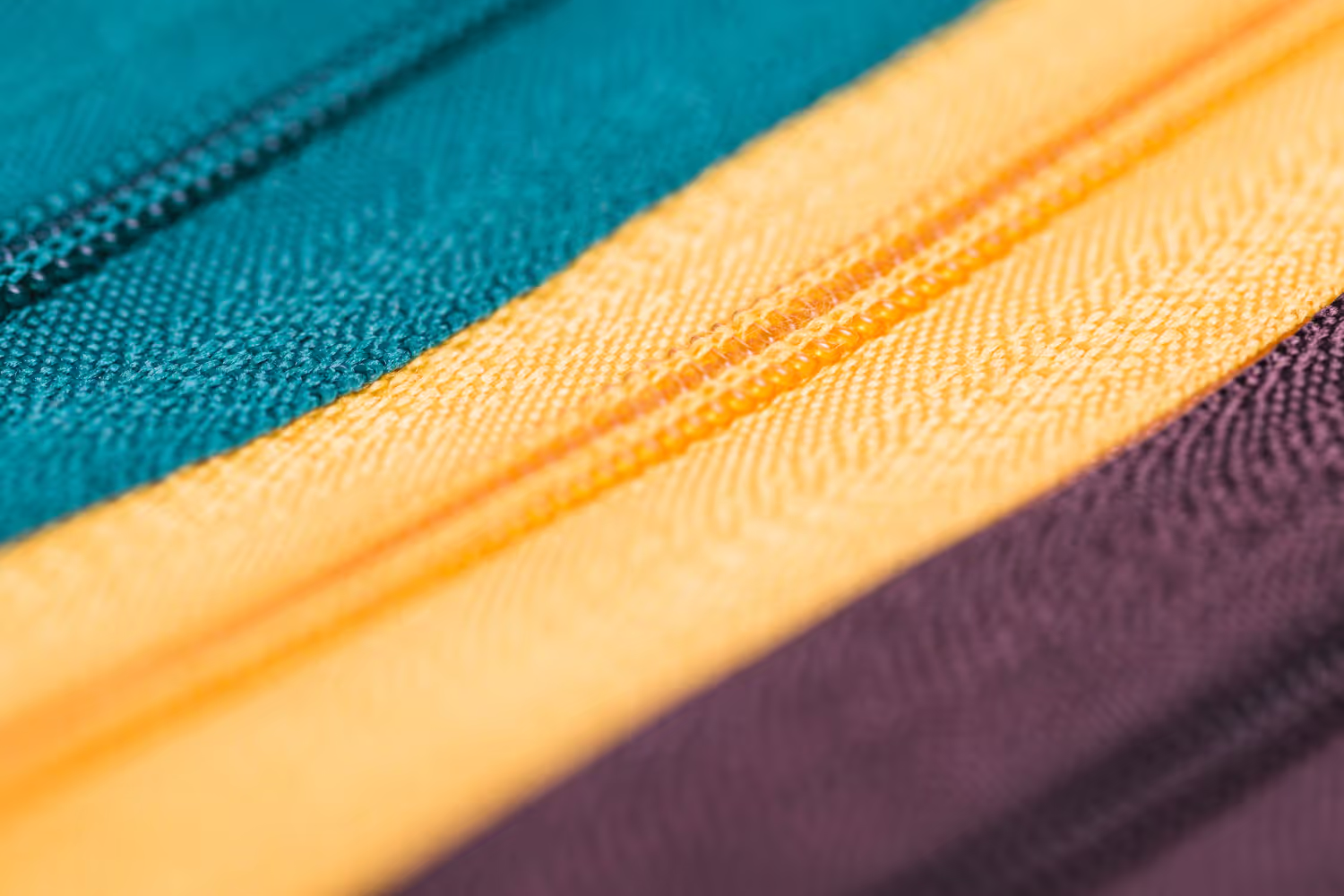
When evaluating construction, examine seams closely under good lighting. More stitches per inch indicates quality—12+ SPI is standard for quality garments while budget construction may use 8 or fewer. Lines should be straight, endings secured properly, and edges finished to prevent fraying. Loose, uneven, or minimal stitching signals budget construction regardless of the price tag. On patterned fabrics, check whether stripes, plaids, or prints align at seams, particularly where sleeves meet body, at shoulder seams, and at pocket placements. Pattern matching requires more material and more careful cutting, so misalignment suggests cost-cutting in production. Quality buttons in mother of pearl, horn, corozo nut, or quality metal indicate investment in details while cheap plastic buttons suggest budget production throughout. Examine zippers since YKK or Riri zippers suggest quality while unbranded or sticky zippers suggest cost optimization. Check hems for evenness and appropriate technique, examine button attachments for security with clean thread work, and look at pocket construction where lined pockets indicate quality and unlined suggests economy.
The True Cost Calculation: Math for Conscious Consumption
Moving beyond sticker price to actual value requires calculating true cost of ownership, an analytical approach that transforms emotional purchasing decisions into rational ones. The fundamental cost per wear calculation divides purchase price by expected number of wears. A $500 coat worn 200 times costs $2.50 per wear while a $100 coat worn 25 times before degrading costs $4 per wear—the expensive coat provides better value despite higher purchase price. This calculation reveals counterintuitive truths: the expensive coat worn daily provides better value than the cheap coat worn occasionally, the trendy piece worn three times costs more per wear than the classic worn dozens of times, and the wedding guest dress worn once represents poor cost per wear regardless of its absolute price. Project realistically rather than optimistically—that statement jacket might seem worth $400 if you'll wear it 100 times, but will you actually? Past behavior predicts future behavior more reliably than current enthusiasm, so look at what you actually wear rather than what you hope to wear.
Beyond purchase price, consider ongoing costs that affect total cost of ownership. Dry cleaning at $10-25 per item at American dry cleaners, professional laundering, specialized storage, and maintenance supplies add up significantly. A "dry clean only" garment worn weekly accumulates $500+ in cleaning costs annually, so a machine-washable alternative might represent better total value. Consider replacement cost: how long until you need to replace the item? Cheap items replaced annually may cost more over five years than quality items lasting the duration—a $50 sweater replaced yearly costs $250 over five years while a $150 sweater lasting five years costs less while providing better daily experience. Quality items often justify repair through resoling shoes at a cobbler for $50-100, reweaving knitwear, or replacing hardware, while budget items often can't be economically repaired because the repair costs more than replacement.
Some items can be sold when you're finished with them, and American resale platforms like The RealReal, Poshmark, and ThredUp have made resale mainstream. Factor expected resale return into your cost calculation since items with strong resale markets effectively cost less than their purchase price implies. Reasonable cost per wear benchmarks for American lifestyles include under $1 per wear for daily wear basics, $1-3 for core wardrobe pieces, $3-5 for seasonal items, $10-20 acceptable for special occasion items, and consideration of rental for one-time event wear.
Navigating the American Market: Brand-Specific Insights
Not all luxury houses deliver equivalent quality, and understanding these variations helps navigate the American retail landscape. Brands with higher quality-to-price ratios include Hermès for exceptional materials and craftsmanship, Brunello Cucinelli for materials focus, Loro Piana for fiber quality, Zegna for tailoring expertise, and Bottega Veneta for leather craftsmanship—these houses maintain manufacturing standards that partially justify their premiums. Some luxury houses have reduced product quality while maintaining or increasing prices, so research specific brands before assuming luxury price means luxury quality. Many luxury houses offer lower-priced items like t-shirts, small leather goods, and entry bags with significant brand premium over actual quality—the $500 logo t-shirt rarely delivers fifty times the quality of a $10 basic, and the $1,200 entry-level designer bag may use inferior leather and hardware compared to the house's main offerings.
“The goal isn't owning expensive things or cheap things—it's owning the right things at the right price. Every item in your closet should be there because it delivers value for what you paid, regardless of what that number is. A $20 t-shirt that you wear weekly and a $2,000 coat that you'll own for decades can both be excellent values.
Within the premium tier, quality-focused leaders include brands built on quality rather than trend—Uniqlo's premium lines particularly their collaborations, COS, Arket, Everlane, Quince, Naadam for knitwear, and Buck Mason for American-made basics. These brands compete on value proposition rather than marketing. Contemporary premium brands like Theory, Vince, and Equipment offer solid quality with fashion-forward design where prices include moderate brand premium but quality generally justifies it for American professional wardrobes. Department store premium through Nordstrom's in-house brands and Banana Republic at full price provides decent quality but requires careful evaluation item by item. Be cautious with premium fast fashion since Zara, & Other Stories, and similar brands price in premium range but often deliver mass market quality—scrutinize carefully rather than assuming price indicates quality.
Some mass market brands exceed their tier in specific categories. Uniqlo offers exceptional quality for the price point, particularly in basics and knitwear, with HeatTech and AIRism lines providing genuine technical performance and partnership items competing with much more expensive alternatives. Target's designer collaborations occasionally offer designer quality at mass market prices when available. Costco's Kirkland Signature delivers surprisingly good quality in basics, particularly wool items and cashmere at remarkable prices. The secondhand luxury market makes luxury items available at mass-market-adjacent prices—a pre-owned Burberry trench on The RealReal might cost less than a new premium alternative while delivering superior quality and longevity.
The Sustainability Dimension and Environmental Considerations
Value calculations increasingly incorporate environmental impact, and for American consumers—the largest per-capita fashion consumers globally—this dimension adds clarity to purchasing decisions. Mass market fashion's low prices often externalize environmental costs through cheap manufacturing involving polluting processes, excessive water usage, and carbon-intensive supply chains spanning continents. The environmental cost not reflected in purchase price gets paid elsewhere—in polluted communities overseas, in climate impact, and in overwhelmed landfills. Disposable fashion designed for limited wear creates waste, with items discarded after one season filling American landfills—85% of textiles in the US end up in landfills rather than being recycled or resold. Global supply chains optimized for cost rather than efficiency generate substantial shipping emissions, and that $15 dress may have traveled 10,000 miles to reach your closet. Fast fashion's model produces excess inventory that often gets destroyed unsold, with consumers purchasing cheap items contributing to demand driving this cycle of waste.
The "buy less, buy better" approach aligns environmental and financial value. A quality coat worn ten years replaces multiple cheap coats, reducing total resource consumption regardless of per-item environmental footprint. Properly maintained quality items need replacement less frequently, reducing overall consumption and the environmental impact of continuous manufacturing. Quality natural fiber garments can eventually biodegrade while synthetic items persist indefinitely, contributing to microplastic pollution. Quality items worth reselling get second or third or fourth lives, extending their useful period and environmental value—the robust American resale market projected to reach $70 billion by 2027 enables this circulation. Sustainability practices vary dramatically by brand and tier: some luxury houses have invested significantly in sustainability while others lag considerably, certain premium brands like Patagonia, Everlane, and Eileen Fisher have built business models around sustainability representing strong value propositions for environmentally conscious American consumers, and some mass market brands have made meaningful sustainability progress though it's uneven and sometimes superficial.
Author: Madison Clarke;
Source: lucyandcoboutique.com
Building a Multi-Tier Wardrobe: Strategic Approach
The smartest approach combines tiers strategically rather than committing exclusively to one, recognizing that different categories deserve different investment levels based on how they affect your daily experience and how long they'll serve you. This requires intentional planning but produces dramatically better results than either extreme—neither all luxury nor all mass market delivers optimal value across a complete wardrobe. The goal is directing your dollars where they generate the most return in quality, longevity, and daily satisfaction.
Allocate highest investment at premium to luxury level for outerwear you wear daily in cold months, recognizing that for most Americans, October through March represents significant coat-wearing time making this the most visible and most frequently used category in your wardrobe. Leather goods used constantly including your daily bag and everyday shoes deserve investment because you use them every single day and quality differences compound over years of daily use. Core tailoring pieces for professional wear merit investment if your career requires them since these items represent you in high-stakes professional situations where quality telegraphs competence and attention to detail. Signature knitwear worn frequently throughout cooler seasons—the cashmere sweater you reach for every weekend, the wool cardigan you layer daily—rewards investment because you experience the quality difference hundreds of times over its lifespan.
Allocate moderate investment from mass to premium for secondary outerwear and shoes that you wear occasionally rather than daily, quality basics in natural fibers that form the foundation of daily outfits without being the focal point, non-signature but regularly worn pieces that you like but don't love, and denim, though premium denim often justifies its cost because the fit and fade development of quality denim dramatically exceeds mass market alternatives. Keep lower investment in mass market for trend experimentation where you're testing whether a style works for you before committing, high-turnover items that you'll replace frequently regardless of quality, loungewear and athleisure for home where appearance matters less and comfort requirements change frequently, and items for specific occasions unlikely to repeat.
Build wardrobe foundations from the best quality you can afford in each category, then add interest through lower-investment pieces that provide variety without financial risk. The perfect white t-shirt might be premium brand at $50-80 because you wear it constantly and the quality difference is tangible against your skin every time you put it on—Buck Mason, Sunspel, or similar brands that specialize in perfecting basics. The trendy printed shirt might be mass market at $30 because you'll tire of it within a season and replacing it doesn't represent a loss. The cashmere sweater might be premium at $200-300 for daily winter use from brands like Naadam or Quince that focus on material quality without luxury markup. The fun novelty sweater might be thrifted or from Target because it serves a specific, limited role in your wardrobe. This strategy concentrates budget where quality matters while allowing variety and experimentation where it doesn't, with the core wardrobe providing daily confidence and the periphery providing creative expression without financial stress.
Rather than filling your wardrobe quickly with mass market—the tempting approach because it feels like progress—consider building slowly with higher-quality pieces that compound in value over time. In the first few months, assess needs honestly and identify most critical gaps based on actual lifestyle rather than aspirational lifestyle, looking at what you actually wear most often and where quality deficits create daily friction. Over the following months, acquire your first investment piece, often outerwear or a quality bag since these items have the highest daily impact and the longest useful life. Through the first year, build core basics in quality versions one piece at a time, replacing worn mass market items with premium alternatives as they need replacement rather than all at once. In year two, continue filling gaps and upgrading weak points as previous items wear out, applying the knowledge you've gained about what you actually wear and need. Ongoing, maintain what you have through proper care, replace as genuinely needed rather than as desired, and minimize new additions to focus spending on quality over quantity. This approach requires patience but produces a better wardrobe over time—the slow accumulation of quality pieces outperforms rapid accumulation of disposable ones and typically costs less over a five-year horizon while providing better daily experience throughout.
Common Mistakes and How to Avoid Them
Higher price often correlates with better quality, but the relationship isn't perfect or linear. Evaluate items individually rather than assuming expensive means good or cheap means bad—a $300 jacket from a quality-focused brand may outperform a $600 jacket from a trend-focused brand. The least expensive items from luxury houses typically represent worst value in their portfolio: the $300 keychain or $500 t-shirt carries the same brand premium percentage as the $3,000 bag but receives far less manufacturing attention, and entry-level designer bags often use inferior materials compared to flagship pieces. The cheapest option upfront often costs most over time, so consider useful life rather than just purchase price—Americans replace fast fashion items an average of 7 times more frequently than quality alternatives.
Brand recognition matters for signaling to others, but if you're dressing for yourself rather than an audience, the visible brand adds little practical value since quality matters regardless of whether anyone recognizes the label. Pre-owned items offer access to quality tiers otherwise unaffordable—a used premium coat may serve better than a new mass market coat at similar price, and the American secondhand market has become sophisticated enough to make this accessible and trustworthy through platforms like The RealReal, Poshmark, and ThredUp. Fashionability and quality are independent variables, so don't confuse them: a trendy piece isn't necessarily well-made and a classic isn't necessarily quality. Evaluate both dimensions separately.
| Situation | Recommended Approach |
| Frequently worn essential | Invest at premium/luxury level |
| Trend piece you want to try | Mass market or secondhand |
| Professional requirement | Quality appropriate to industry standards |
| Impulse want | Wait 48 hours, reconsider after reflection |
| Replacing worn-out staple | Upgrade quality from last version if possible |
| First item in category | Start modest, upgrade with knowledge |
Making Your Decision: A Practical Framework
When facing specific purchase decisions, ask yourself key questions that cut through marketing and emotion to reveal actual value. What's your realistic cost per wear based on how often you'll actually wear this given your actual lifestyle—not your aspirational lifestyle, but the life you actually live with its actual demands and routines? What's the quality like when you evaluate materials and construction regardless of brand, setting aside the label to assess the physical product on its own merits? What's the brand premium and how much are you paying for name rather than product—is this price justified by quality you can see and feel, or primarily by prestige you may or may not value? Is there a better value alternative and have you explored other brands at various price points that might deliver similar quality without the same markup? Does this fill a genuine need or are you buying for buying's sake, satisfying an urge to acquire rather than addressing a real gap in your wardrobe? Will this work with what you own since isolated pieces offer less value than versatile ones that multiply your outfit options? What's your care cost when you factor in ongoing maintenance expense—will dry cleaning eat into the value proposition over time?
The question "is the brand worth it?" has no universal answer because value is personal and contextual. What's worth the money depends on what you value, what you'll use, and what alternatives exist for your specific situation. The sophisticated approach isn't brand loyalty or brand rejection—it's item-by-item evaluation based on genuine quality assessment, realistic use projections, and clear-eyed awareness of what portion of price is brand premium versus product value. Build a wardrobe that combines the best of all tiers: luxury where it genuinely delivers exceptional quality or value retention, premium where it offers the quality sweet spot for your most-worn items, and mass market where quality differences don't matter or experimentation trumps investment. The result is a closet where every piece earns its place—not through price tag but through the value it delivers to your life every time you reach for it.
Smart shopping isn't about finding the cheapest option or proving you can afford the most expensive. It's about maximizing the value you receive for the money you spend—a calculation that changes by category, by brand, and by individual piece. Learn to evaluate quality independently of price and brand, and every purchase becomes more satisfying. You'll spend less over time while owning better things, looking better in them, and feeling confident that your wardrobe represents thoughtful choices rather than either desperation or impulse. That's the goal: not the cheapest closet or the most expensive one, but the smartest one.
Pricing and brand assessments reflect American market conditions as of early 2026. Brand quality and value propositions change over time; conduct current research before major purchases.
Related Stories
Read more
Read more


The content on lucyandcoboutique.com is provided for general informational and inspirational purposes only. It is intended to showcase fashion trends, style ideas, and curated collections, and should not be considered professional fashion, styling, or personal consulting advice.
All information, images, and style recommendations presented on this website are for general inspiration only. Individual style preferences, body types, and fashion needs may vary, and results may differ from person to person.
Lucyandcoboutique.com is not responsible for any errors or omissions, or for actions taken based on the information, trends, or styling suggestions presented on this website.