
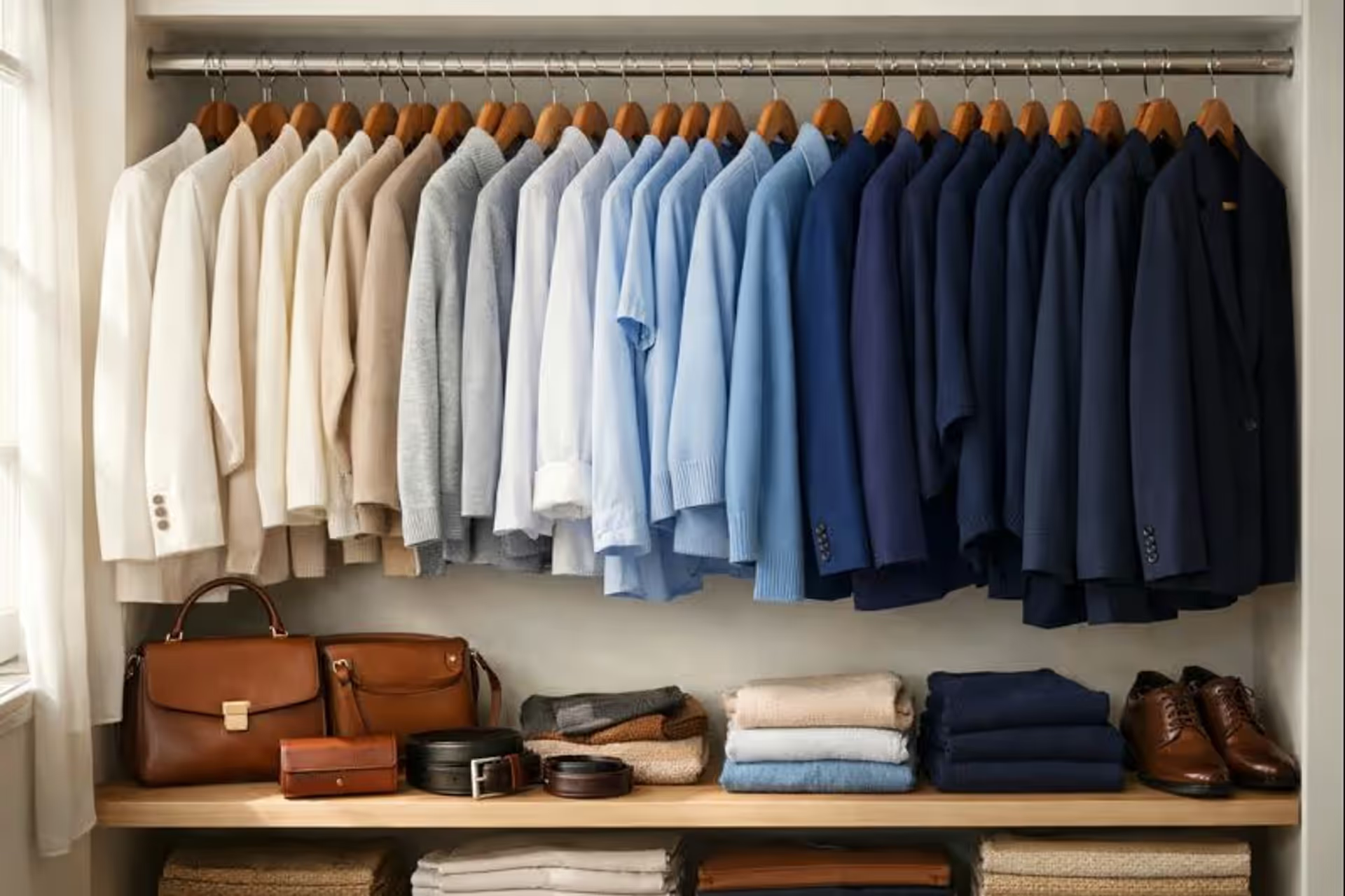
A well-organized closet section showing coordinated pieces that work together, demonstrating how thoughtful wardrobe curation simplifies daily outfit selection.
How to Look Put-Together Every Day: Styling Rules Stylists Actually Use

Content
Content
You've seen it countless times: two people wearing nearly identical items—a white shirt, dark jeans, simple shoes—yet one looks pulled-together and intentional while the other looks like they grabbed whatever was clean. The difference isn't money or body type or even the specific clothes themselves. The difference is a set of principles that professional stylists apply automatically but rarely articulate, rules so ingrained in their practice that they've become invisible even to the people who use them daily.
These aren't arbitrary fashion dictates or trend-dependent guidelines that expire with each season. They're foundational principles about how clothes interact with bodies, how colors and proportions create visual harmony, and how small details accumulate into an overall impression of care and intention. Once you understand them, getting dressed becomes dramatically simpler. You stop wondering why some outfits work and others don't. You develop the ability to assess yourself in the mirror and know exactly what's off and how to fix it. You build a wardrobe where pieces work together rather than existing as isolated items that somehow never combine into satisfying outfits.
The goal isn't perfection or fashion-magazine polish that requires professional assistance and unlimited budgets. The goal is consistent competence—looking appropriately put-together for your life, every day, without the mental energy drain of figuring out what works from scratch each morning. This guide breaks down the actual rules stylists use, translated from professional shorthand into practical principles you can apply immediately.
The Foundation: Fit Is Everything
Every stylist will tell you the same thing when pressed for their single most important rule: fit matters more than anything else. A perfectly fitted inexpensive garment looks better than a poorly fitted expensive one, every single time. This isn't opinion or preference—it's how human visual perception works. We read fit as care, as intention, as someone who pays attention to themselves and their presentation. We read poor fit as carelessness, even when the wearer has invested significant money in their clothing.
Understanding fit requires understanding that clothing sizes are approximations, not destinations. A size medium from one brand fits completely differently than a medium from another, and neither may be the right fit for your specific body. The number or letter on the tag is a starting point for finding garments, not a definition of how clothes should fit you. Professional stylists ignore sizes entirely after the initial selection—they assess only how the garment sits on the body in front of them, adjusting their choices based on what they see rather than what the label says.
The markers of good fit vary by garment type but follow consistent principles. Shoulder seams should sit at your actual shoulder point—where your arm meets your torso—not drooping down your upper arm or pulling up toward your neck. This single point affects how every top and jacket looks on your body; get it wrong and everything else looks off regardless of how well other elements fit. Sleeves should hit at appropriate points: jacket sleeves showing a half-inch of shirt cuff, shirt sleeves hitting at the wrist bone, casual sleeves falling wherever the design intends without pulling or bunching. Across the chest, fabric should lie flat without pulling at buttons or creating horizontal stress lines, but also without excessive fabric billowing or bunching. The back should sit smoothly without riding up or creating diagonal pull lines from the shoulders.
For pants and skirts, fit begins at the waist—sitting where the garment is designed to sit, whether that's natural waist, low hip, or somewhere between, without gapping, pinching, or requiring constant adjustment throughout the day. Through the hip and thigh, fabric should accommodate your body without clinging or creating visible lines, but also without excessive volume that adds bulk. Length matters enormously: trousers pooling at the ankle look careless, while trousers breaking cleanly at the shoe look intentional. The rise—the measurement from crotch seam to waistband—affects both comfort and appearance, with incorrect rise creating unflattering lines and constant discomfort.
The secret professional stylists know is that almost nothing fits perfectly off the rack, and the solution isn't endless shopping but strategic tailoring. A $15 alteration to hem pants properly or take in a waist transforms a garment from acceptable to excellent. Having sleeves shortened, shoulders adjusted, or darts added costs modest amounts but creates dramatic improvements in appearance. Building a relationship with a good tailor—and budgeting alterations into the cost of clothing—represents one of the highest-return investments in your appearance. The blazer that fits your shoulders but is too long in the body becomes perfect with a $30 alteration; without it, you look like you borrowed someone else's jacket.
Proportion and Balance: The Visual Math
After fit, proportion and balance determine whether an outfit works or fails. These concepts operate on visual principles that humans process automatically without conscious awareness—we sense when proportions are off even when we can't articulate why. Understanding these principles consciously allows you to manipulate them deliberately, creating outfits that feel right because they follow the visual logic our brains expect.
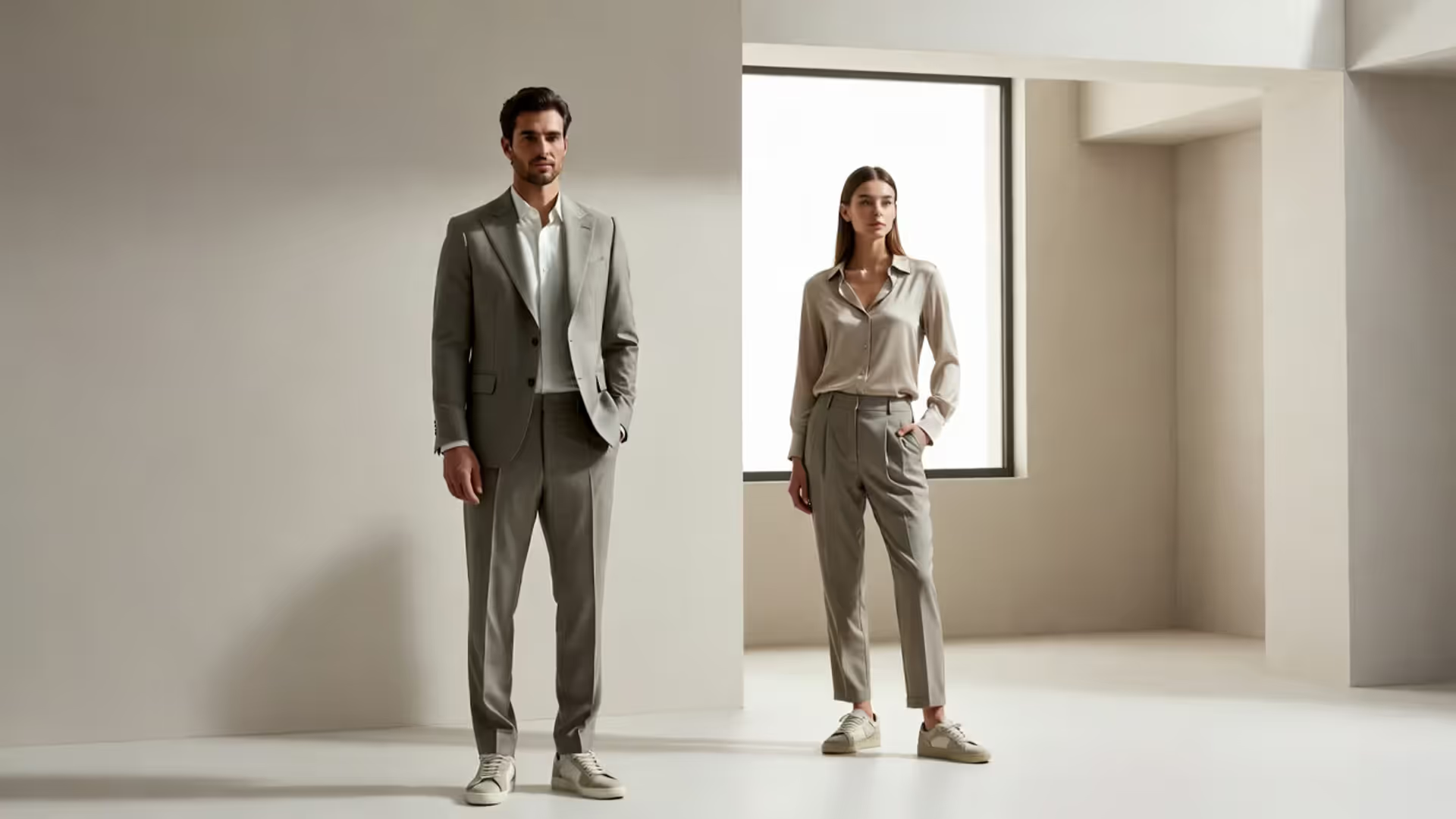
The fundamental principle is that outfits need visual balance, which doesn't mean symmetry but rather appropriate weight distribution. A voluminous top paired with voluminous bottoms creates overwhelming bulk; a fitted top with fitted bottoms can look dated or overly body-conscious depending on context. The classic formula—one fitted element and one relaxed element—works because it creates visual interest while maintaining balance. A slim trouser with an oversized sweater, a full skirt with a tucked fitted top, wide-leg pants with a cropped jacket: these combinations work across decades of fashion because they satisfy our innate preference for balanced visual weight.
“The single most common mistake I see is ignoring proportion entirely—wearing whatever pieces someone likes without considering how they interact. Two beautiful garments can create an unflattering outfit if their proportions fight each other. Learning to see proportion transforms how you get dressed.”
Proportion also involves the relationship between your body and your clothes. Where garments end creates visual lines that either flatter or work against your natural proportions. Hemlines that hit at the widest point of calves, thighs, or hips draw attention to those areas; hemlines that hit above or below these points create cleaner lines. The goal isn't hiding your body but rather creating the visual effect you want—and that requires awareness of where lines fall. Cropped tops and high-waisted bottoms elongate legs by creating the illusion of a longer lower body. Longer tops over slim bottoms can balance broader shoulders or a larger bust. Understanding these relationships gives you control over your visual presentation rather than leaving it to chance.
The rule of thirds—borrowed from visual arts—applies to outfit construction. Dividing your outfit into unequal thirds rather than equal halves creates more dynamic, visually interesting proportions. A top that ends at high hip paired with pants creates roughly a one-third/two-thirds division; a cropped jacket over a longer dress creates similar proportions. Equal halves—a top that ends exactly at the hip joint, splitting the body into two equal sections—tend to look static and less sophisticated. You don't need to measure precisely, but training your eye to recognize thirds versus halves helps you understand why some outfits feel more polished than others.
Vertical lines elongate; horizontal lines widen. This fundamental principle underlies countless styling choices. V-necklines create vertical emphasis that elongates the torso and neck. Vertical stripes draw the eye up and down. A long, open cardigan creates vertical lines that streamline the figure. Conversely, horizontal stripes, boat necklines, and cropped lengths emphasize width. Neither is inherently better—the choice depends on the visual effect you want to create. Understanding this allows you to use line direction deliberately rather than discovering accidentally that certain garments make you feel wider or shorter than others.
The Color Principles That Actually Matter
Color theory can become endlessly complex, but the principles stylists actually use daily are surprisingly simple. Mastering a few key concepts allows you to coordinate outfits confidently without needing a color wheel or advanced artistic training. The goal isn't becoming a color expert but rather developing enough understanding to avoid obvious mistakes and create reliable harmony.
The first principle is understanding your neutral base. Every functional wardrobe needs a family of neutral colors that work together—typically built around either warm neutrals (cream, camel, brown, olive, warm grey) or cool neutrals (white, black, navy, cool grey, burgundy). These neutrals form the foundation of most outfits and must coordinate seamlessly with each other. Mixing warm and cool neutrals carelessly creates visual discord: a cool grey blazer over a cream shirt looks slightly off in ways people notice but can't name, while the same blazer over a white shirt looks clean and intentional. Identifying whether your wardrobe skews warm or cool—and shopping accordingly—eliminates a major source of outfits that don't quite work. Most people gravitate naturally toward one temperature without realizing it; examining your most-worn and most-loved pieces usually reveals a pattern that, once identified, can guide future acquisitions.
Building on neutrals, the concept of accent colors simplifies color decisions dramatically. Rather than trying to coordinate complex color combinations, select one or two accent colors that work with your neutral base and appear throughout your wardrobe as repeating elements. A navy-and-white neutral base might be accented with burgundy and forest green; a black-and-cream base might feature gold, rust, and deep teal. These accent colors appear in accessories, knitwear, and statement pieces, creating visual cohesion across your wardrobe without requiring every piece to match every other piece. The repetition of accent colors across different outfits creates an identifiable personal style while simplifying shopping decisions—if it's not in your neutral or accent palette, you don't need to consider it. This constraint actually liberates rather than restricts, eliminating the paralysis of infinite options.
The monochromatic principle offers an easy path to sophisticated outfits that even style beginners can execute successfully. Wearing variations of a single color family—different shades and textures of blue, for instance, or various tones of brown and tan—creates automatic visual cohesion and a streamlined, intentional appearance. Monochromatic dressing doesn't mean exact matching, which can look costume-like; it means staying within a color family while varying shade, texture, and intensity. A navy blazer, light blue shirt, and medium blue trousers read as coordinated and polished without any complex color theory. This approach works particularly well when you're unsure about color combinations or dressing quickly—staying within one family eliminates the possibility of clashing while creating an impression of thoughtful coordination.

Author: freepik.com;
Source: https://www.freepik.com/
The principle of one statement applies to color as it does to other outfit elements. If one piece features bold color, pattern, or print, the remaining pieces should recede into supporting roles. A vibrant red coat needs neutral companions; a patterned shirt needs solid trousers and jacket. This principle prevents the visual chaos that results from competing elements demanding attention simultaneously. It also explains why some outfits feel "too much" despite containing individually attractive pieces—multiple statement elements create noise rather than style.
The Details That Signal Intention
Beyond fit, proportion, and color, a collection of smaller details separates put-together appearances from merely adequate ones. These details seem minor individually but accumulate into an overall impression of care and attention—or its absence.
Pressing and steaming matter more than most people realize. Wrinkled clothes read as careless regardless of their quality or how well they fit. A wrinkled linen shirt looks deliberately relaxed; a wrinkled cotton shirt looks like you slept in it. Stylists steam or press everything—not to achieve rigid formality but to ensure that wrinkles appear intentional rather than neglectful. Investing in a quality steamer and using it regularly transforms how your clothes present. For items that need pressing, understanding which fabrics require which heat levels prevents both wrinkles and heat damage. The five minutes spent steaming a shirt before wearing it pays dividends in perceived put-togetherness.
“People underestimate how much the small things matter. I can tell immediately whether someone will look polished by checking their shoes and their collar. If the shoes are scuffed and the collar is wrinkled or stained, nothing else matters—the impression is already made. These details are the first things that register, even before anyone consciously processes the outfit.”
Shoes carry disproportionate weight in outfit assessment. Scuffed, worn, or dirty shoes undermine otherwise perfect outfits because people look at shoes—it's a universal human behavior that transcends culture. Clean, well-maintained shoes signal attention to detail even when everything else is simple. This doesn't require expensive shoes or frequent replacement; it requires regular cleaning, conditioning leather, replacing worn heels, and storing shoes properly. A shoe-shine kit and five minutes of maintenance weekly keeps everyday shoes looking appropriate. Keeping one pair of shoes in excellent condition for occasions when impression matters ensures you're never caught with nothing presentable.
The collar-and-cuff zone gets noticed because it frames the face and hands—the parts of you people actually look at during interaction. A dingy collar, frayed cuffs, or stained neckline register immediately and create impressions that better elements can't overcome. Checking this zone before wearing items—and retiring or replacing items when they've degraded—maintains the visual impression of freshness and care. White and light-colored items in this zone show wear faster and need replacement more frequently; building this expectation into your wardrobe budget prevents the slow degradation that makes wardrobes look tired.
Hardware and trimmings create impressions of quality or cheapness that people register without consciously noticing. Cheap, tarnished, or mismatched hardware—buttons, zippers, buckles—signals budget production even on otherwise decent garments. Quality hardware operates smoothly and maintains its finish over time. When acquiring new pieces, examining hardware quality helps predict how items will look after months of wear. When maintaining existing pieces, replacing degraded buttons or having zippers repaired can extend the life and appearance of garments worth keeping.
The principle of intentional finishing applies to how you wear clothes, not just which clothes you choose. A shirt tucked in one context and left untucked in another changes the outfit's formality and intention. Rolling sleeves creates different energy than wearing them down. Buttoning a jacket versus leaving it open, cuffing pants versus letting them fall, choosing which buttons to fasten on a cardigan—these micro-decisions communicate intention. Stylists obsess over these details because they determine whether an outfit looks finished or merely assembled. Developing awareness of these choices, and making them deliberately rather than by default, is part of looking put-together.
Building Outfit Formulas That Work
The most practical styling technique involves developing reliable outfit formulas—combinations that work every time, removing daily decision-making from getting dressed. Professional stylists rely on formulas more than inspiration; they know that repeatable success beats occasional brilliance for actual life utility.
The concept of a uniform—a personal uniform, not a literal identical outfit—underlies many successful wardrobes. Steve Jobs's black turtleneck represents an extreme version, but the principle applies at any consistency level. Identifying the general formula that works for your body, lifestyle, and aesthetic allows you to dress confidently on autopilot. This might mean always pairing slim pants with relaxed tops, always wearing a certain silhouette of dress, always anchoring outfits with a blazer. The specific formula matters less than having a formula—something that reliably produces acceptable results without requiring creative energy.
Useful formulas share certain characteristics. They must work for the contexts you actually inhabit—professional, casual, social, whatever your life requires. They must be reproducible with items you own and can acquire—not dependent on one irreplaceable piece. They must be comfortable enough to wear all day without adjustment. They should feel like you, aligned with your aesthetic preferences and self-presentation goals. Testing potential formulas over time—wearing them repeatedly, assessing how they perform across conditions—reveals which formulas deserve adoption versus which looked good once but don't hold up to real use.
| Formula Type | Components | Best For |
| The Elevated Basic | Quality t-shirt + blazer + tailored trousers + clean sneakers or loafers | Smart casual workplaces, weekend errands, casual dining |
| The Dress Foundation | Simple dress + layering piece (cardigan, jacket) + appropriate shoes | Office environments, events, situations requiring easy polish |
| The Monochrome Stack | Same-color-family top + bottom + varying textures | Days requiring effortless sophistication, creative environments |
| The Contrast Play | Fitted top + relaxed bottom OR relaxed top + fitted bottom | Most casual and professional situations |
| The Third Piece Anchor | Basic top + basic bottom + interesting jacket/cardigan/vest | When basics alone feel incomplete |
The third piece principle deserves specific attention because it solves the problem of outfits that feel unfinished. Many people own excellent basics—good t-shirts, quality jeans, decent shoes—yet their outfits feel incomplete. The missing element is usually a third layer that adds visual interest and communicates intention: a blazer, a cardigan, a vest, a jacket, even a well-chosen scarf. Two-piece outfits (top plus bottom) require the individual pieces to carry significant visual interest; three-piece outfits allow the third piece to provide that interest while basics remain basic. Building a collection of versatile third pieces that work across your wardrobe creates instant outfit elevation with minimal effort.
The Grooming and Finishing Foundation
Clothing represents only part of looking put-together; grooming and personal care form the foundation that either supports or undermines your outfit choices. Stylists understand this interaction intuitively—no outfit compensates for unkempt grooming, and excellent grooming elevates simple outfits significantly. The best-dressed person in a room with messy hair, bitten nails, and visible grooming neglect will always look less put-together than a simply-dressed person with polished grooming basics. This isn't about beauty standards or extensive routines; it's about the impression of care and intention that extends beyond clothing choices.
Hair that appears intentional reads as put-together regardless of style—a deliberate messy look, a clean cut, a polished blowout, a carefully maintained natural texture. Hair that appears neglected—outgrown cuts, unintentional frizz, visible roots when color is involved, bedhead that wasn't styled into intentional texture—undercuts clothing efforts because it signals that the wearer didn't prioritize their appearance even minimally. The specific style matters far less than the appearance of intention and maintenance. Finding a hairstyle you can maintain consistently, that works with your hair's natural tendencies rather than fighting them, and that you can execute on tired mornings represents practical investment in daily appearance. The hairstyle that requires 45 minutes of effort might look amazing but won't serve daily life; the style that takes 10 minutes and works every time provides better real-world value.
Skincare visible on face and hands—the areas people actually see during interaction—contributes to overall polish in ways that operate below conscious awareness. Hydrated, healthy-appearing skin provides a better foundation for any outfit than dry, neglected skin. This doesn't require complex routines, expensive products, or extensive time investment; basic cleansing, moisturizing, and sun protection handle most needs for most people. Hands specifically deserve attention because they're constantly visible during interaction—applying hand cream regularly, maintaining nails at a consistent length and cleanliness, addressing visible dryness or damage. These elements read as self-care and attention to detail. The person with chipped nail polish reads as less put-together than the person with bare, clean nails; maintaining whatever nail approach you choose signals more care than abandoned maintenance.
Fragrance, when used, should be subtle enough that people notice only when close—never announcing your presence from across a room or lingering in spaces after you leave. Overwhelming fragrance undermines polish as surely as body odor does, drawing attention in ways that distract from your overall presentation. The goal is pleasant neutrality or gentle enhancement, never olfactory dominance that makes people wish you'd apply less. Applying fragrance to pulse points rather than directly to clothes, choosing quality over quantity, and developing awareness of how scents interact with your body chemistry all contribute to appropriate fragrance use. Some people's chemistry amplifies fragrance while others' chemistry mutes it; adjusting application accordingly ensures your actual scent impact matches your intention.
The principle of consistency applies throughout grooming as it applies to clothing: looking put-together every day requires sustainable practices, not heroic effort on special occasions followed by neglect during ordinary life. Systems that work on busy mornings, routines that can be maintained through stressful periods, products that you'll actually use rather than aspirational purchases that collect dust—these practical considerations matter more than optimal but unsustainable practices. Better to have a simple routine you execute daily than an elaborate one you abandon when life gets demanding. The person who washes their face every night and applies moisturizer every morning looks more consistently polished than the person who does elaborate skincare sometimes and nothing other times.
Dressing for Your Actual Life
A common disconnect exists between the clothes people own and the lives they actually live. Wardrobes filled with professional attire when work is casual, event clothes when evenings are spent at home, uncomfortable pieces that never get worn because daily life requires movement—these mismatches create both closet frustration and getting-dressed difficulty.
“I ask every new client to track what they actually wear for two weeks before we work together. The results always surprise them. Most people's real wardrobes—what they actually reach for—represent a fraction of what they own. Understanding your real life, not your aspirational life, is where useful wardrobe building starts.”
Honest assessment of how you spend your time should drive wardrobe investment. If 80% of your week involves a casual office, weekend errands, and home time, 80% of your wardrobe should serve those contexts excellently rather than hanging unworn while you struggle to dress appropriately for actual daily life. This seems obvious but contradicts how many people shop—buying for special occasions, aspirational activities, and fantasy versions of their lives rather than the real thing. Applying the 80/20 principle—ensuring 80% of your wardrobe serves 80% of your time—creates both closet efficiency and getting-dressed ease.
Comfort compatibility matters for real-life dressing. The most beautiful outfit becomes useless if it's uncomfortable enough to affect your behavior or require constant adjustment throughout the day. Testing how garments feel during actual activities—sitting at a desk, walking meaningful distances, bending and moving as your day requires—reveals whether items can serve regular rotation or should be reserved for limited occasions. Stylists prioritize wearability because they understand that clients won't wear uncomfortable clothes regardless of how good those clothes look. Building a wardrobe of items you're genuinely comfortable in produces better real-world results than building a collection of impressive pieces you avoid wearing.
Lifestyle changes require wardrobe adjustments. A career shift from corporate to creative, a move from urban to suburban, a life transition that changes daily activities—these events often leave wardrobes misaligned with current needs. Recognizing when your wardrobe no longer serves your life, and making deliberate adjustments rather than struggling with inappropriate options, maintains looking put-together through life changes. This might mean significant wardrobe overhaul during transitions or gradual replacement as needs become clear.
Seasonal Transitions and Wardrobe Maintenance
Seasonal dressing in climates with meaningful temperature variation presents specific challenges that stylists address through intentional planning rather than reactive scrambling. The transitions between seasons—when temperatures fluctuate unpredictably—create the most dressing difficulty; the deep seasons themselves, once you've adjusted, become simpler.
Layering represents the core skill for seasonal transitions. Building outfits in removable layers allows adjustment throughout days when morning cold becomes afternoon warmth, or indoor climate control creates temperature swings. Effective layering requires pieces of appropriate weights—thin enough to layer without bulk, substantial enough to provide warmth when needed. It also requires visual coherence when layers are both on and off; the underlayers need to work as a visible outfit when outer layers come off. Selecting layering pieces with this dual functionality in mind—looking good under other things and as standalone pieces—maximizes wardrobe utility.
Wardrobe maintenance affects looking put-together as directly as wardrobe selection. Clothes that have degraded through wear—pilling, fading, stretching, staining—undermine outfits regardless of how well they originally fit or coordinated. Regular assessment of wardrobe condition, with retirement or replacement of degraded items, maintains the overall quality level of available options. This doesn't require frequent replacement; it requires honest assessment and action when items have passed their useful life. Developing awareness of how items age in your care—which fabrics pill, which colors fade, which constructions weaken—informs both maintenance practices and future purchasing decisions.
| Maintenance Task | Frequency | Impact on Appearance |
| Steaming/pressing before wearing | Each wear | Eliminates wrinkles that signal carelessness |
| Checking for stains, damage | Before each wear | Prevents wearing degraded items unknowingly |
| Cleaning per garment requirements | As needed | Maintains freshness and fabric condition |
| Shoe cleaning and conditioning | Weekly | Preserves major appearance-impact item |
| Closet organization | Monthly | Ensures visibility of all options |
| Seasonal assessment and editing | Twice yearly | Removes degraded items, identifies gaps |
Proper storage preserves garment condition between wears. Quality hangers that maintain shoulder shape, appropriate folding for knitwear that stretches on hangers, protection from dust and light for items worn seasonally—these practices extend the wearable life of clothing while maintaining appearance quality. The investment in storage systems pays returns through longer garment life and better daily presentation.

Author: Samantha Brooks;
Source: lucyandcoboutique.com
Shopping With Purpose: Acquiring What Actually Works
How you shop affects your ability to look put-together as much as what you already own. Stylists shop differently than most consumers—more deliberately, with clearer criteria, and with their clients' existing wardrobes firmly in mind.
Shopping with intention means knowing what you need before entering stores or browsing online. Maintaining a running list of wardrobe gaps—the items you're missing that would complete outfits or replace worn pieces—focuses shopping energy productively. This list should be specific: not "a jacket" but "a navy blazer that works with my existing trousers and fits through the shoulders properly." Specificity prevents the common pattern of purchasing items that seem attractive in isolation but fail to integrate with existing wardrobes. Every item in your closet should have multiple partners; acquiring pieces without considering their relationships to what you own creates closet bloat without improving daily options.
The try-on process deserves more attention than most shoppers give it. Evaluating fit as described earlier—shoulders, chest, waist, length—requires removing items from hangers and actually wearing them, ideally with the type of undergarments and shoes you'd wear in real life. Assessing how items move, sit, and feel over time reveals wearability that static mirror-checking misses. Trying items with existing wardrobe pieces—either brought along or mentally referenced—confirms actual outfit potential. The few extra minutes invested in thorough evaluation prevents accumulating items that never quite work when you try to wear them.
Quality recognition improves with practice. Learning to assess fabric weight, construction details, and finishing quality—as discussed earlier regarding garment evaluation—helps identify items worth their price versus items that will disappoint quickly. Developing the habit of checking seams, buttons, fabric composition, and pattern matching before purchasing prevents bringing home items that reveal their cheapness only after the purchase is complete. Better to pass on items that fail quality inspection than to discover their shortcomings after the return window closes.
The concept of cost-per-wear should guide purchasing decisions for core wardrobe items. Dividing expected purchase price by realistic number of wears reveals the true cost of wearing an item. A $200 blazer worn weekly for two years costs under $2 per wear; a $50 blazer worn three times before it degrades costs over $16 per wear. This calculation favors quality for frequently-worn items while appropriately limiting investment in occasional-use pieces. Thinking in terms of cost-per-wear rather than purchase price alone produces better wardrobe value over time.
Putting It All Together: Daily Practice
Understanding styling principles intellectually differs from applying them automatically during busy mornings. The gap between knowledge and practice closes through deliberate repetition—intentionally applying principles until they become habitual rather than requiring conscious thought.
Start with fit, always. Before evaluating any other aspect of an outfit, assess whether each piece fits properly. Shoulders sitting correctly, appropriate ease through the body, proper lengths—confirm these fundamentals first. Many outfit problems resolve entirely when fit issues are addressed; conversely, no amount of styling sophistication compensates for poor fit. Making fit assessment automatic—something you check every time you get dressed—establishes the foundation for everything else.
Apply proportion principles next. Step back from the mirror and assess the overall silhouette. Does the outfit create visual balance? Are proportions working in thirds rather than halves? Is there appropriate contrast between fitted and relaxed elements? Adjusting a tuck, adding a layer, changing a shoe height, or switching a pant style can shift proportion from wrong to right. Seeing proportion issues requires distance from the mirror—close examination shows detail but obscures overall silhouette.
Verify color coordination. Do the colors work together? Are you staying within a neutral family, or have you inadvertently mixed warm and cool in ways that create discord? Does any color clash or compete for attention inappropriately? These questions become faster to answer with practice, eventually registering automatically without conscious analysis.
Check the details. Clothes pressed or steamed? Collar and cuffs in good condition? Shoes clean and appropriate? Hardware visible and in good shape? These quick checks catch issues before you leave the house, when they're still correctable. Running through a mental checklist before departing—a habit that becomes automatic with practice—prevents the disappointment of noticing problems after it's too late to address them.
Finally, step back and assess intention. Does this outfit communicate what you want to communicate? Does it serve the context you're dressing for? Does it feel like you? This holistic assessment catches misalignments between individual elements that work and overall effect that doesn't. Sometimes technically correct outfits still don't feel right; trusting that instinct and making adjustments honors the subjective dimension of personal style alongside the objective principles.
The Path to Effortless Polish
Looking put-together every day isn't a talent some people have and others lack—it's a set of learnable skills applied consistently until they become automatic. The stylists who make it look effortless simply internalized these principles long ago; for them, assessing fit or checking proportion requires no more conscious thought than you give to steering a car you've driven for years. The effortlessness is real, but it's the effortlessness of practiced skill rather than innate gift.
The learning curve is real but finite. Initially, applying these principles requires conscious effort and deliberate attention. You'll stand in front of mirrors longer, think more carefully about purchases, and catch yourself analyzing other people's outfits to understand why they work or don't. This active learning phase is normal and necessary—it's how skills develop. You might feel self-conscious about the attention you're paying to details, or frustrated that getting dressed takes longer than it used to. This is temporary discomfort on the path to permanent improvement.
Over weeks and months, the conscious effort decreases as principles become automatic. You'll start sensing fit problems before fully articulating them, seeing color discord immediately rather than having to analyze it, recognizing proportion issues at a glance. The deliberate attention transforms into intuitive assessment. You'll know an outfit works or doesn't work before you can explain why, though you'll also have the vocabulary to explain it when needed. This intuitive knowing—the ability to see immediately what others have to think about—is what people mistake for natural talent. It's just practice that's been repeated enough to become invisible.
The principles in this guide don't require expensive clothes, specific body types, or particular aesthetic preferences. They work across price points, body shapes, and personal styles because they're based on how human visual perception works rather than on specific fashion rules that change seasonally. A minimalist and a maximalist can both apply these principles; someone dressing from thrift stores and someone shopping luxury can both benefit. The principles are universal; only their application becomes personal based on your preferences, your body, and your life.
What changes is your relationship to getting dressed. Instead of frustrated closet-standing, wondering why nothing works, you'll have reliable formulas that produce consistent results. Instead of purchases that never quite integrate, you'll acquire pieces with clear roles in your wardrobe. Instead of occasional good outfit days amid generally mediocre ones, you'll establish a baseline of put-together that becomes your normal. That baseline creates the freedom to occasionally exceed it on days when you want to make more effort, while ensuring that minimum effort still produces acceptable results. You'll never again feel that you have "nothing to wear" despite a closet full of clothes; you'll understand your options and how to combine them.
The stylists' secret, ultimately, is that there is no secret—just principles applied consistently until they become invisible. Now you know what they know. The only remaining step is practice, and every day you get dressed is an opportunity to practice. Start tomorrow morning.
Styling principles reflect timeless foundations applicable across changing fashion trends. Personal style development builds on these fundamentals while expressing individual preferences and aesthetic goals.
Related Stories

Read more
Read more

The content on lucyandcoboutique.com is provided for general informational and inspirational purposes only. It is intended to showcase fashion trends, style ideas, and curated collections, and should not be considered professional fashion, styling, or personal consulting advice.
All information, images, and style recommendations presented on this website are for general inspiration only. Individual style preferences, body types, and fashion needs may vary, and results may differ from person to person.
Lucyandcoboutique.com is not responsible for any errors or omissions, or for actions taken based on the information, trends, or styling suggestions presented on this website.