
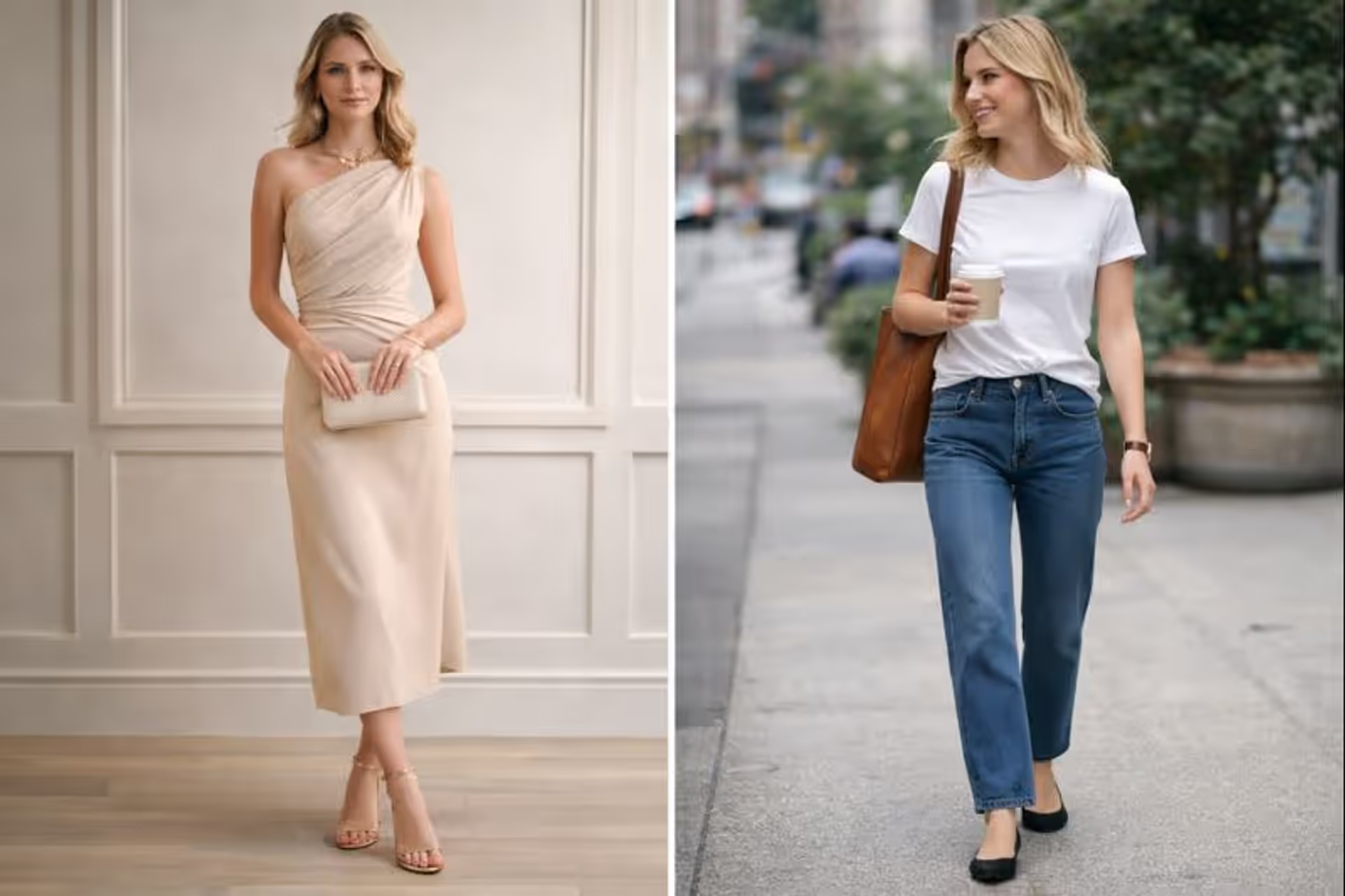
The contrast between styled Instagram content and real daily dressing, showing how the same person approaches fashion for photos versus ordinary life.
Style Inspiration: How Fashion Girls Actually Dress Off Instagram

Content
Content
Scroll through any fashion influencer's Instagram and you'll find a curated parade of statement pieces, editorial poses, and perfectly coordinated outfits that seem to exist in a world without coffee spills, subway commutes, or the reality of wearing the same pants three days in a row because they're the only ones that fit right. The feed suggests a life of endless outfit changes, where every moment demands a different look and basics are for other people. The reality, even for these professional fashion people, looks dramatically different.
The women who work in fashion—editors, stylists, designers, influencers whose actual job involves clothing—don't dress like their Instagram feeds suggest. They can't. The logistics alone make it impossible: nobody has time to change outfits four times daily, nobody's real life involves exclusively statement pieces, and nobody actually wears white silk to grab morning coffee. What they actually wear reveals something useful for anyone trying to develop personal style: the people who think most about fashion have largely arrived at simple, reliable formulas that work. The elaborate content is performance; the real wardrobe is strategy.
This isn't hypocrisy or deception—it's the natural gap between content creation and actual living. Understanding this gap matters because consuming fashion content without understanding its context leads to frustration and wardrobe dysfunction. You see the editorial image, buy the pieces, then wonder why your life doesn't accommodate daily statement dressing. Learning what fashion professionals actually wear, as opposed to what they post, provides more useful inspiration than the content itself. The real style—the version that exists when cameras aren't rolling—offers practical blueprints for looking consistently good without exhausting effort or unrealistic expectations.
What Fashion Editors Actually Wear to Work
The mythology of fashion magazine offices involves enviable closets deployed daily in competitive outfit displays. The reality, according to actual fashion editors, involves significantly more repetition, significantly more basics, and significantly less drama than the mythology suggests. The women whose literal job involves evaluating fashion for a living have largely converged on practical approaches that prioritize consistency over spectacle.
The uniform concept dominates real fashion-industry dressing. Most editors develop a personal formula—a silhouette, a color palette, a general approach—that they repeat with minor variations rather than reinventing daily. One editor might always wear some version of wide trousers with a tucked top and blazer. Another might live in black turtlenecks with different bottoms and statement jewelry. A third might rotate through simple dresses with varying jackets. The specific formula varies by person, but the formula approach is nearly universal. The women who see the most fashion have concluded that having a reliable template works better than pursuing daily novelty.
Style is not about novelty. It’s about consistency — knowing what works and repeating it with confidence.
— Tonne Goodman, former Fashion Director, Vogue
The biggest misconception about working in fashion is that we're constantly in runway looks. The reality is I wear basically the same thing every day—black pants, a good top, interesting shoes. I save the statement pieces for events where I'm being photographed. Day to day, I need to move, I need to be comfortable, I need to not think too hard about getting dressed because I'm thinking about fashion all day anyway.
Workwear basics form the foundation of most fashion-industry wardrobes. Quality trousers in black, navy, and perhaps one interesting neutral appear in constant rotation. Simple knits—cashmere crews, cotton tees, silk shells—serve as reliable bases. Blazers in versatile colors provide the third-piece polish that takes simple combinations into professional territory. This foundation differs from typical professional wardrobes primarily in fit precision and fabric quality rather than in category variety. Fashion editors don't wear dramatically different types of clothes to work; they wear similar types executed at higher quality levels and with better proportional awareness.
The statement pieces that do appear serve specific functions. A distinctive jacket might be the signature element someone is known for—their reliable "thing" rather than rotating drama. An interesting bag or shoe might provide the personality that basic clothes lack. One piece of real jewelry, worn constantly rather than rotated, might be the element that makes simple outfits feel personal. The strategy involves investing in a few distinctive elements rather than many, then repeating those elements consistently enough that they become recognizable style signatures.
The editing instinct applies to their own closets as ruthlessly as to magazine pages. Fashion editors tend toward smaller, more curated wardrobes than you might expect, with aggressive editing of pieces that don't work. The constant exposure to new fashion doesn't translate into constant acquisition; if anything, it clarifies what actually matters and what represents noise. The physical closets of fashion professionals often disappoint visitors expecting overflowing abundance—instead, they find tightly edited collections where everything sees regular use and nothing exists just because it was trendy or free.
The Influencer Reality Behind the Content
Fashion influencers present a particular paradox: their job requires creating aspirational content while their actual lives involve wearing clothes to do normal things. The content creation process means owning pieces specifically for photos that may never be worn in real contexts, changing multiple times daily during "shoot days," and treating clothing as props as much as wardrobe. Understanding this context changes how you should interpret what you see.
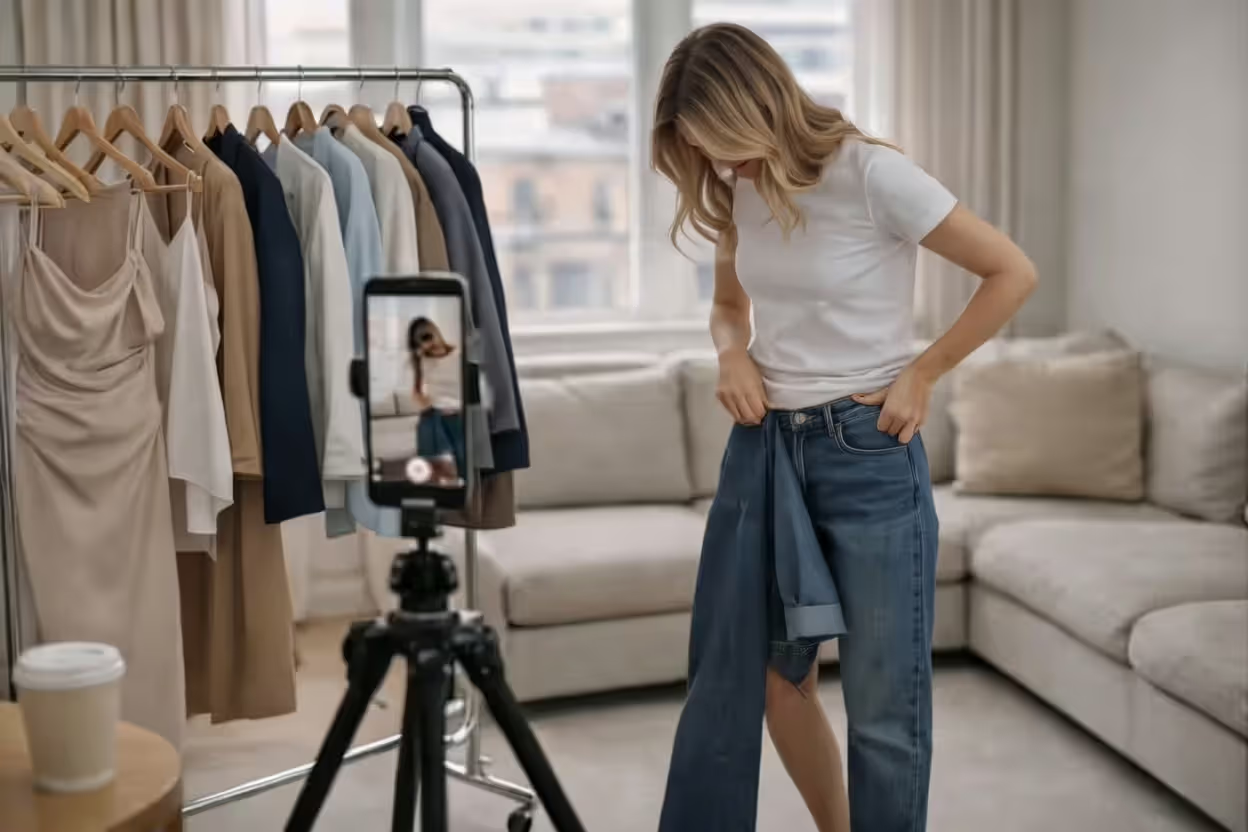
The content-versus-real split operates almost like separate wardrobes. Influencers often have explicit categories: content pieces (photographed, then stored or returned), sponsor pieces (worn for campaigns, then sometimes kept, sometimes not), and actual wardrobe (what they grab when not creating content). The actual wardrobe portion tends toward the same reliability that fashion editors embrace—formulas that work, basics that coordinate, pieces that function for real life rather than photo life. The elaborate looks in feeds often represent a small fraction of total wearing time, created specifically for content during dedicated periods rather than integrated into daily existence.
The gifting and sponsorship economy creates closets full of pieces that don't reflect personal choice. Influencers receive constant product in hopes of features, creating accumulation pressure regardless of whether items suit their style or needs. Many maintain separate storage for gifted items they don't actually wear, pulled out when featuring a brand but not integrated into real rotation. The apparently vast wardrobes visible in content often include significant percentages of never-worn pieces that exist because they arrived free rather than because they were chosen. What influencers actually purchased with their own money, and what they reach for when not creating content, often tells a different story than their feeds suggest.
Author: Lauren Whitfield;
Source: lucyandcoboutique.com
Real style preferences emerge in what influencers wear when not creating content—the picks visible in casual stories, the looks in candid paparazzi-style images, the pieces that appear repeatedly rather than once. These real preferences almost universally skew simpler than feed content: more basics, more repetition, more practical choices. The influencer posting daily statement outfits might spend actual weekends in the same jeans and sweater combination, saving the elaborate looks for dedicated content creation windows. Recognizing this pattern helps calibrate expectations—the aspirational content is aspirational even for the people creating it.
I probably create content in maybe 20% of what I own. The other 80% is actual wardrobe—things I wear to run errands, go to dinner, live my life. My feed makes it look like I'm constantly in elaborate outfits, but most days I'm in jeans and a nice sweater like everyone else. The content version isn't lying exactly, but it's not the whole picture either.
The sustainability disconnect deserves mention. Fashion content promotes constant newness—new pieces, new trends, new purchases—because novelty drives engagement. Yet many influencers privately express fatigue with this cycle and maintain personal wardrobes built on longevity rather than churn. The tension between what content requires and what makes sense for actual life creates cognitive dissonance that some navigate by explicitly separating content from reality, and others struggle with more visibly. The influencers worth following often find ways to address this honestly rather than pretending the content represents sustainable daily practice.
What Stylists Wear When Not Styling Others
Fashion stylists—the people who dress celebrities, create editorial images, and assemble looks professionally—offer another window into fashion-industry reality. Their job involves maximum fashion exposure and maximum outfit creativity applied to clients; their personal dressing often reflects minimum friction and maximum efficiency.
The professional focus on others creates personal wardrobe simplification. Stylists spend their creative energy on client wardrobes, leaving less appetite for elaborate personal dressing. Many describe their own closets as almost aggressively simple—reliable pieces in a narrow color range, repeated formulas that require zero thought, clothes that function as background rather than statement. The creative output goes to work; personal dressing becomes functional rather than expressive.
Black dominates stylist wardrobes to a degree that surprises outsiders. The practical reason involves not competing with clients—if your job involves making others look good, wearing neutral backgrounds keeps focus where it belongs. But the psychological reason matters too: after spending all day thinking about clothing, many stylists want to think about their own clothing as little as possible. Black removes decisions. Black always works. Black lets you disappear into professionalism while others shine.
The quality investment pattern among stylists favors construction over design interest. They know how clothes are made, can assess quality instantly, and spend money on pieces where quality matters functionally—a blazer that holds its shape, shoes that survive constant motion, fabrics that don't wrinkle during long days. They typically avoid spending on trend-driven pieces because professional exposure has shown them how quickly trends pass. The stylist closet often reads as almost boring compared to client closets: solid colors, classic shapes, exceptional construction, minimal variety. This isn't lack of imagination; it's professional wisdom about what actually matters in daily wear versus what matters in content or client work.
The efficiency mindset shapes everything. Stylists move constantly—setting up shoots, visiting showrooms, running between appointments. Their clothes must accommodate movement, survive long days, and look acceptable across various contexts without changes. This functional requirement produces wardrobes optimized for performance rather than presentation. The stylist who creates elaborate editorial looks might show up to that shoot in the same black jeans and blazer she's worn all week because it works, it's comfortable, and she can move garment racks without worrying about her clothes.
The Designer Secret: Simplicity at the Source
Fashion designers—the people who create the elaborate collections shown on runways—often maintain the simplest personal wardrobes of anyone in the industry. The irony is structural: spending all creative energy on designing clothes for others leaves little desire to complicate personal dressing. Many famous designers became known for signature personal uniforms worn daily for decades, their consistent personal presentation becoming as recognizable as their design work.
Karl Lagerfeld's white shirt, black jacket, and ponytail. Vera Wang's consistent black palette. Giorgio Armani's endless navy and grey. Carolina Herrera's white shirts with full skirts. Jil Sander's minimalist neutrals. These designer uniforms weren't limitations but deliberate choices by people with unlimited access to clothing, who concluded that consistency served them better than variety. The message from fashion's creative peak: the people who could wear anything often choose to wear the same thing, finding freedom in self-imposed constraint rather than endless option.
The designer uniform serves multiple functions beyond simple preference. It creates recognizable personal brand—you can identify these figures across decades because their look stayed constant while their designs evolved. It removes daily decision-making, preserving creative energy for design work rather than dissipating it on personal outfit construction. It demonstrates confidence—choosing consistency when you could choose novelty signals security rather than need for external validation through clothing. And it provides visual stability in an industry defined by constant change, anchoring the designer as a fixed point while collections shift around them.
The more fashion you see, the simpler your own wardrobe becomes.
— Phoebe Philo, fashion designer
This pattern among designers inverts the assumption that fashion people should dress more elaborately. Maximum fashion exposure often produces maximum wardrobe simplicity. The people who see the most clothing, who have the most access, who understand construction and design most deeply, tend to converge on edited simplicity rather than expansive variety. Their professional context provides enough fashion stimulation; personal dressing becomes respite rather than additional creative output. Understanding this inversion helps calibrate your own expectations—if designers with unlimited options choose simplicity, perhaps simplicity isn't settling but arriving at wisdom.
The Common Elements: What They All Actually Wear
Across categories—editors, influencers, stylists, designers—certain commonalities emerge in real wardrobes as opposed to content or runway wardrobes. These shared elements reveal what fashion professionals have collectively concluded actually works for dressed humans living actual lives. The convergence is striking: people with very different roles, aesthetics, and contexts have arrived at similar foundational approaches.
Quality basics in a limited color range appear universally. White t-shirts of excellent fabric, bought in multiples and replaced when they degrade. Black trousers that fit impeccably, often from the same brand repurchased when the previous pair wears out. Navy blazers or jackets that elevate any combination. Cream or grey knits in cashmere or quality wool that layer easily. Denim in a preferred wash, the same cut bought repeatedly. These fundamentals form the backbone of professional fashion wardrobes not because these people lack imagination but because they've concluded this foundation works. The specific items vary by personal coloring and preference, but the category—excellent basics in coordinating neutrals—remains constant across job functions, aesthetic preferences, and decades in the industry.
| Wardrobe Element | Why Fashion Professionals Choose It | Common Specifications |
| Quality white t-shirt | Goes with everything, easy foundation | Heavy cotton, perfect fit, multiple backups |
| Black or navy trousers | Professional versatility, easy coordination | Impeccable tailoring, comfortable fabric |
| Perfect-fit jeans | Casual versatility, weekend backbone | Premium denim, precise hemming |
| Versatile blazer | Instant outfit elevation | Neutral color, excellent construction |
| Simple knit sweater | Comfortable polish, seasonal utility | Cashmere or quality wool, classic silhouette |
| Reliable flats | Comfortable elegance, walking capability | Quality leather, classic shape |
| One quality handbag | Daily carry that elevates basics | Investment piece, neutral color |
Fit obsession exceeds style obsession across all industry roles. Fashion professionals care more about how clothes fit their bodies than about the specific designs chosen. They alter everything—trousers hemmed to precise lengths, jackets taken in at the waist, sleeves shortened by half an inch—knowing their measurements precisely and rejecting pieces that don't fit regardless of how appealing the design. This fit-first mindset reflects professional understanding that poorly fitted interesting clothes look worse than well-fitted simple clothes. The emphasis on fit over variety produces wardrobes that read as consistently polished even when composed of relatively basic pieces. A fashion editor in a perfect-fitting simple outfit reads as more stylish than a civilian in an ill-fitting elaborate outfit; fit is doing the work that design gets credit for.
Third pieces solve the outfit completion problem that two-piece combinations (just top and bottom) often have. The blazer, the cardigan, the leather jacket, the vest—some layering element that adds visual interest and polish to basic combinations—appears in every professional fashion wardrobe. The specific third piece varies by personal style and role, but having reliable third pieces rather than relying on two-piece outfits is universal. This layer provides the completion that makes simple outfits read as styled rather than merely assembled. Fashion professionals reach for a third piece almost automatically when assessing outfits; the "need something else" feeling gets resolved through layers rather than through adding complexity to individual pieces.
Signature elements replace rotating variety in accessory approaches. Rather than different accessories daily, fashion professionals tend toward consistent signature pieces—one watch worn always, one necklace never removed, one ring that's become part of their hand, one bag carried daily for months or years. These signatures provide personal recognizability without requiring decision-making or extensive accessory collections. The consistency also allows investing in quality for these pieces, since they'll see constant use rather than rotation. A fashion editor known for her gold hoops wears the same hoops daily; when people think of her, they think of those hoops. This recognition value rewards consistency over variety, and the decision-elimination value rewards it even more.
Translating Inspiration to Reality
Understanding how fashion professionals actually dress provides useful context, but the question remains: how do you apply these insights to building your own functional style? The translation from observation to application requires adapting principles to your specific context, budget, and preferences.
The mistake most people make is trying to recreate specific looks rather than understanding underlying principles. When you see a fashion editor looking great in basics, the lesson isn't 'buy those exact pants'—it's 'invest in pants that fit perfectly and you'll wear constantly.' The principle transfers even when the specific execution can't.
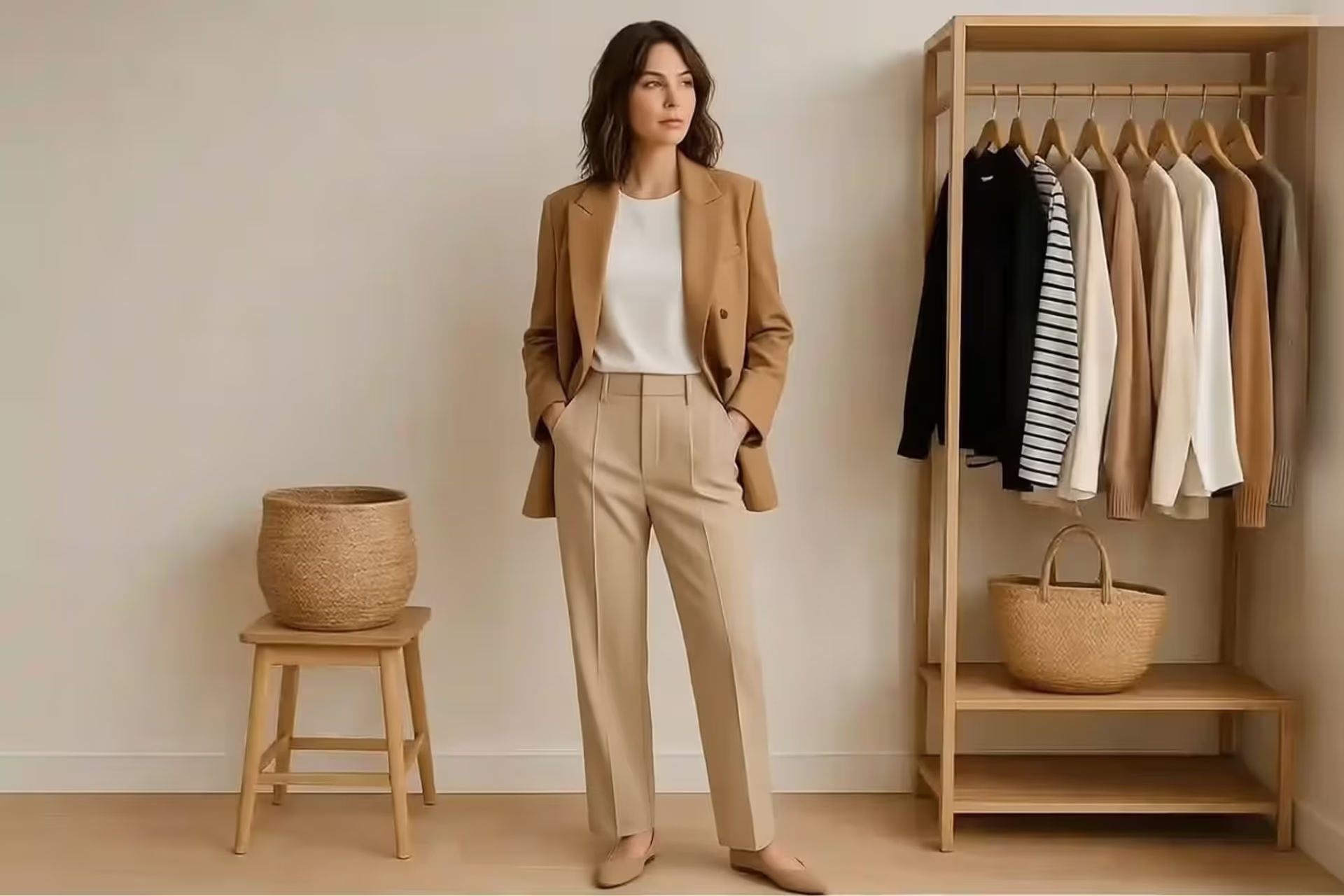
The formula approach adapts to any lifestyle. Fashion professionals develop personal uniforms because the approach works, not because of special industry requirements. You can develop your own formula: identify silhouettes that work on your body, colors that flatter and coordinate, and a general template that you can execute with variation but not reinvention. This might be "slim jeans, interesting top, quality boots" or "dresses with cardigans and flats" or "wide trousers, tucked blouse, blazer." The specific formula matters less than having one—a reliable approach that removes daily decision-making while producing consistent results.
Quality over quantity applies regardless of budget level. Fashion professionals spend on fewer, better pieces rather than more, cheaper ones—and this approach works at any budget level. Whatever you can afford to spend on clothing produces better results concentrated on fewer excellent pieces than distributed across many mediocre ones. The $200 clothing budget can buy one pair of perfect pants or several pairs of inadequate pants; the fashion professional wisdom says choose the one excellent pair.
Fit investment transforms existing wardrobes. Before buying anything new, assess whether alterations could transform what you own. Fashion professionals alter everything; their clothes fit perfectly not because they have perfect bodies but because they've tailored pieces to their actual shapes. A $30 alteration on pants you already own can provide more wardrobe improvement than a $100 new purchase. Building a relationship with a good tailor—and budgeting alterations into clothing spending—applies professional practice to any wardrobe at any budget level.
The editing mindset prevents closet dysfunction. Fashion professionals ruthlessly remove pieces that don't work, keeping closets tight and functional. Applying this approach means honestly assessing what you actually wear, removing what you don't, and resisting accumulation of pieces that seem appealing but don't serve your real life. A smaller wardrobe of pieces you love and wear consistently serves better than a large wardrobe with forgotten corners of unworn items.
What Social Media Gets Wrong
The mechanics of social media content creation systematically misrepresent how fashion actually works in real life. Understanding these distortions helps you consume fashion content without being misled by its inherent biases.
Novelty requirements distort wardrobe reality. Content algorithms reward new posts featuring new things; repeating outfits provides less engagement than debuting fresh looks. This creates pressure to show more variety than anyone actually wears, making feeds appear as endless parades of different outfits when real life involves much more repetition. The influencer posting daily "outfit of the day" content might be showing thirty different looks in a month when she actually wears five to ten outfits in regular rotation, with the others appearing only for content purposes.
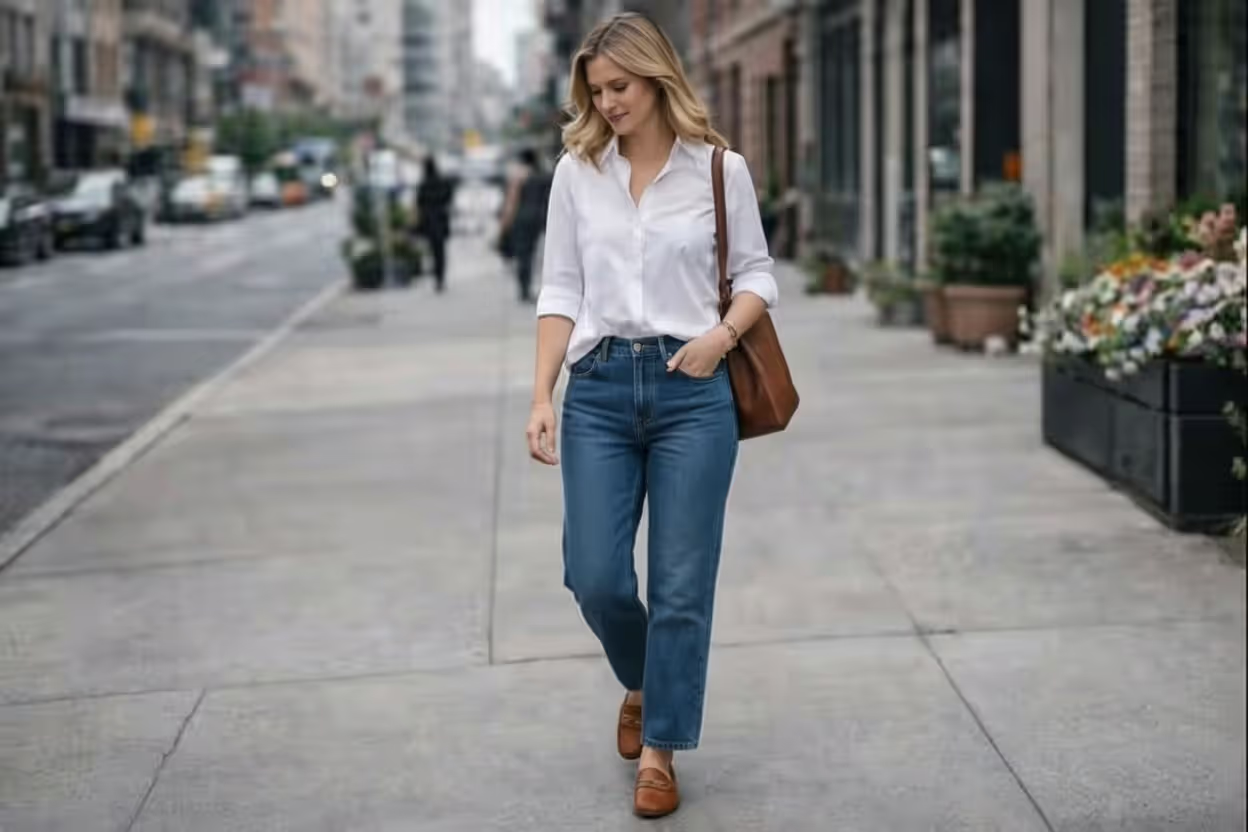
Photography optimization differs from life optimization. Outfits that photograph well and outfits that work well in motion, across temperature changes, through full days, often aren't the same. Content creation can prioritize photography impact over wearability—a stunning statement dress makes better content than comfortable workwear, regardless of which serves actual life better. The feed showcases what photographs impressively; real wardrobes contain what functions effectively.
Author: Lauren Whitfield;
Source: lucyandcoboutique.com
The sponsorship influence creates content that looks like personal choice but isn't. When influencers feature products because they're paid to rather than because they'd choose them independently, the feed becomes an advertisement disguised as personal style. This doesn't make the content worthless, but it means you're seeing promotional choices rather than organic preference. The pieces that appear repeatedly across years, without sponsorship indication, more likely reflect genuine wardrobe integration than the heavily tagged recent features.
| Content Distortion | How It Misleads | Reality Check |
| Daily new outfits | Suggests constant variety is normal | Most people wear 20% of their wardrobe 80% of the time |
| Statement pieces dominant | Suggests basics aren't enough | Fashion professionals live in basics |
| Perfect photography conditions | Suggests clothes always look this good | Real lighting and movement differ |
| Sponsored features | Suggests personal endorsement | May be paid placement, not preference |
| Outfit-specific locations | Suggests each outfit needs perfect setting | Real life happens in imperfect contexts |
| Seasonal trend adoption | Suggests wardrobe needs constant updating | Classics work across seasons and years |
The aspiration-reality gap operates by design. Fashion content creates desire by showing idealized versions of dressed life—perfect outfit, perfect setting, perfect moment. This aspiration drives engagement and, ultimately, consumption. Recognizing the gap between aspirational content and achievable reality helps you appreciate content aesthetically while building wardrobes practically. The beautiful image can inspire without becoming an unrealistic standard.
Building Authentic Style From Realistic Inspiration
Developing personal style that works for your actual life requires filtering inspiration through practical constraints. The fashion professional approach—formulas, quality, fit, editing—provides the framework; your specific execution should reflect your context, not theirs. The goal isn't copying how fashion people dress but adapting their methods to your circumstances.
Start from your life, not from content. Assess what your actual days require: office dress codes and their real enforcement level, activity levels and movement needs, climate considerations across seasons, body comfort requirements that you'll honor regardless of how something looks, and budget constraints that define your realistic options. Build wardrobe strategy from these real requirements rather than from aspirational images that may not map to your circumstances. The influencer who creates content in temperate Los Angeles provides different inspiration than you need for Minneapolis winters or Miami humidity. The editor who works in casual creative environments offers different models than you need for conservative finance offices. The stylist who moves constantly all day has different footwear requirements than someone at a desk. Context matters more than aesthetic preference in determining what actually works.
Identify what actually works through observation rather than aspiration. Pay attention to what you reach for repeatedly, what makes you feel confident, what functions through full days without adjustment or discomfort, what still looks good at 6 PM rather than just at 8 AM. These observations about your actual behavior provide more useful style information than abstract preferences about what you think you should like. The pieces you actually wear—not the pieces you admire in your closet but never choose—indicate your real style more accurately than the pieces you admire but never reach for. Track your choices for a few weeks: What do you grab when running late? What do you choose when nothing is required? What appears in photos where you weren't thinking about being photographed? These patterns reveal genuine preference.
Develop your formula through iteration rather than declaration. Try approaching dressing with a formula mindset: identify a general template, execute it repeatedly, refine based on what works and what doesn't. Your formula will evolve through use rather than arriving fully formed through inspiration consumption or single-session wardrobe planning. The first attempt at "blazers over everything" might reveal that structured blazers don't suit your movement patterns but unstructured ones do. The "simple dresses" approach might work for some contexts but not others. The "always tucked" rule might work with some bottoms but create problems with others. Iteration produces personalized formulas that fit your life specifically, refined through actual wearing rather than theoretical planning.
Apply the editing discipline continuously rather than periodically. Fashion professionals keep wardrobes tight through continuous editing rather than annual purges. Build this habit: when something stops working—fit changes, fabric degrades, style evolves, life context shifts—remove it promptly rather than letting non-working pieces accumulate. When something new arrives, consider whether it will actually see regular use or join the unworn corner. This discipline prevents the closet-full-of-nothing phenomenon that plagues wardrobes built from accumulated impulses rather than strategic curation. The goal is a closet where everything works, not a closet where some things work and many things don't but remain anyway.
Invest in the foundation first, before adding interest. Before adding interesting pieces, ensure the basics work perfectly. Quality t-shirts that fit, trousers that flatter, jeans that serve as reliable default, a blazer that elevates any combination—these fundamentals matter more than any statement piece because they'll see more use and have more impact on daily presentation. Fashion professionals have excellent foundations because they understand that interesting additions can't compensate for broken basics. Your most boring wardrobe pieces deserve more investment and attention than your most exciting ones; they'll see more wear and have more impact on how you look day to day.
The Permission to Be Simple
Perhaps the most valuable insight from how fashion professionals actually dress is permission: permission to repeat outfits, to rely on basics, to develop formulas rather than pursuing constant novelty, to find confidence in consistency rather than variety. The people who work in fashion, who see the most fashion, who have the most fashion access, largely dress simply. If they've concluded that simplicity works, perhaps you can too.
The content economy needs novelty to function; you don't. Fashion content exists to drive engagement, and engagement requires newness—new outfits, new pieces, new combinations, new trends. But your life doesn't require daily outfit debuts or constant wardrobe evolution. You can wear the same thing every Monday if it works for Mondays. You can repeat your best outfit formula for weeks if it keeps working. You can build a wardrobe small enough to know completely and use completely, resisting the accumulation pressure that content creates. The fashion professionals' permission slip says: simplicity isn't settling; it's arriving at what works.
The quality-over-quantity principle isn't aspirational marketing—it's observed behavior of people with unlimited fashion access choosing constraint. If someone who could have any clothes chooses few excellent ones, perhaps the "more is more" message in content reflects content needs rather than wardrobe wisdom. Fashion editors who receive constant gifted product still maintain tight, edited closets. Designers who could wear their own runway pieces daily choose uniform simplicity. Stylists with access to showrooms and loans dress in repetitive basics. This pattern—access producing restraint rather than abundance—inverts the expected relationship and suggests that the "more is better" message serves commercial interests rather than personal ones. You can apply this same wisdom at any budget level: fewer, better, repeated, refined. The goal isn't having a lot of clothes; it's having the right clothes for your life.
The formula approach isn't limitation but liberation from the daily burden of outfit invention. Developing a personal uniform doesn't constrain creativity; it redirects creative energy from daily outfit solving to occasional formula refinement. Fashion professionals don't seem bored by their consistent approaches; they seem freed by them—freed to think about other things, freed from morning decision fatigue, freed from the anxiety of endless options that paralyzes rather than enables. Your formula, once developed and refined through actual wearing, can provide the same freedom. The creativity goes into building the formula; once it works, executing it becomes routine rather than creative challenge.
The fit obsession translates directly and universally regardless of style preference, budget level, or body type. Whatever you wear, it will look better if it fits perfectly. This insight requires no special access or budget—it requires attention to how clothes sit on your body and willingness to alter pieces until they work. The fashion professional who alters everything demonstrates that perfect fit comes from adjustment, not from luck in finding off-the-rack perfection. Your body doesn't need to change to fit clothes; clothes can change to fit your body. Apply the same practice: expect to alter, budget for alterations, and never accept poor fit as inevitable. The $30 hemming that makes pants perfect provides more style return than the $300 purchase that never quite works.
From Inspiration to Implementation
Looking at fashion content, understanding its limitations and distortions, and extracting useful principles requires active rather than passive consumption. Use content as starting point for adaptation rather than template for copying. Let it suggest possibilities while you filter for practicality. The passive approach—scrolling, absorbing, vaguely wanting—produces frustration; the active approach—analyzing, extracting principles, testing applications—produces results.
Save inspiration that could work for your actual life. When an image resonates, analyze why: Is it the color combination? The silhouette? The proportions? The specific pieces? The styling details like tucking or accessorizing? The context or mood it creates? Identify the transferable principle rather than the specific execution. "Navy and cream with tan accessories looks elegant" transfers more usefully than "that exact outfit would look good on me." Collect inspiration that illuminates principles you can apply rather than specific looks you'd need to recreate. This might mean saving images not for the outfits themselves but for the color palettes, the proportional relationships, the styling techniques visible.
Test principles through actual wearing rather than theoretical planning. When inspiration suggests trying something—tucking shirts when you typically don't, adding blazers to casual combinations, exploring a different color palette, rolling sleeves differently—test it in real life rather than just imagining. Principles prove themselves through actual use or fail through actual use; imagining whether something works provides less information than wearing it provides. The testing process might confirm the inspiration applies to your life or reveal that it doesn't; either result proves valuable and advances your understanding of what actually works for you. The morning mirror and the full day of wearing tell more than any amount of Pinterest board construction.
Refine through iteration rather than revelation. Your style won't arrive fully formed from sufficient inspiration consumption or from a single breakthrough moment of clarity; it develops through repeated refinement of approaches that work. The fashion professional who always wears wide trousers didn't decide once to wear wide trousers; she discovered through wearing that wide trousers worked for her body and life, then refined which wide trousers work best, with what tops, in what fabrics, in what contexts. Your refinement process will be similar: trying, observing, adjusting, gradually converging on what actually serves your needs. Each wearing provides data; over time, the data accumulates into genuine self-knowledge about what works for you.
Protect against the consumption pressure that content creates. Fashion content exists substantially to stimulate purchasing; that's the business model underlying most of what you see. Brands pay influencers to feature products, algorithms favor content that drives shopping action, and even organic content tends to emphasize newness and acquisition because that drives engagement. You can appreciate content aesthetically, extract useful principles, and enjoy the visual pleasure without translating every inspiration into acquisition. The fashion professionals with tight, edited wardrobes resist constant acquisition despite constant exposure—they've learned to separate appreciation from ownership. You can develop similar resistance: enjoying looking without needing to own, appreciating images without translating to purchases, consuming content without being consumed by it. This resistance serves both wardrobe quality (fewer, better purchases) and financial health (less spending driven by manufactured desire).
The ultimate goal isn't dressing like fashion professionals but learning from how they've resolved the same questions you face: what to wear, how to decide, how to look consistently good without exhausting effort. Their solutions—formulas, quality, fit, editing, simplicity—work because they address universal dressing challenges rather than industry-specific ones. Adapted to your specific context, these solutions can work for you too. The content provides inspiration; the real-life practice of fashion professionals provides the roadmap. Use both, but trust the roadmap more.
Style observations reflect patterns across fashion industry professionals and content creators. Individual approaches vary; adapt principles to your specific context, preferences, and requirements.
Related Stories
Read more
Read more


The content on lucyandcoboutique.com is provided for general informational and inspirational purposes only. It is intended to showcase fashion trends, style ideas, and curated collections, and should not be considered professional fashion, styling, or personal consulting advice.
All information, images, and style recommendations presented on this website are for general inspiration only. Individual style preferences, body types, and fashion needs may vary, and results may differ from person to person.
Lucyandcoboutique.com is not responsible for any errors or omissions, or for actions taken based on the information, trends, or styling suggestions presented on this website.