Fashion Trends: The Year Style Gets Personal
Fashion Trends: The Year Style Gets Personal
The fashion world has spent the last several years in a state of productive chaos. Pandemic disruptions gave way to revenge dressing. Revenge dressing mellowed into quiet luxury. Quiet luxury sparked debates about authenticity, accessibility, and who gets to define taste. Through it all, American consumers have been watching, adapting, and increasingly asking a question that fashion rarely bothers to answer: What does this actually mean for my life?
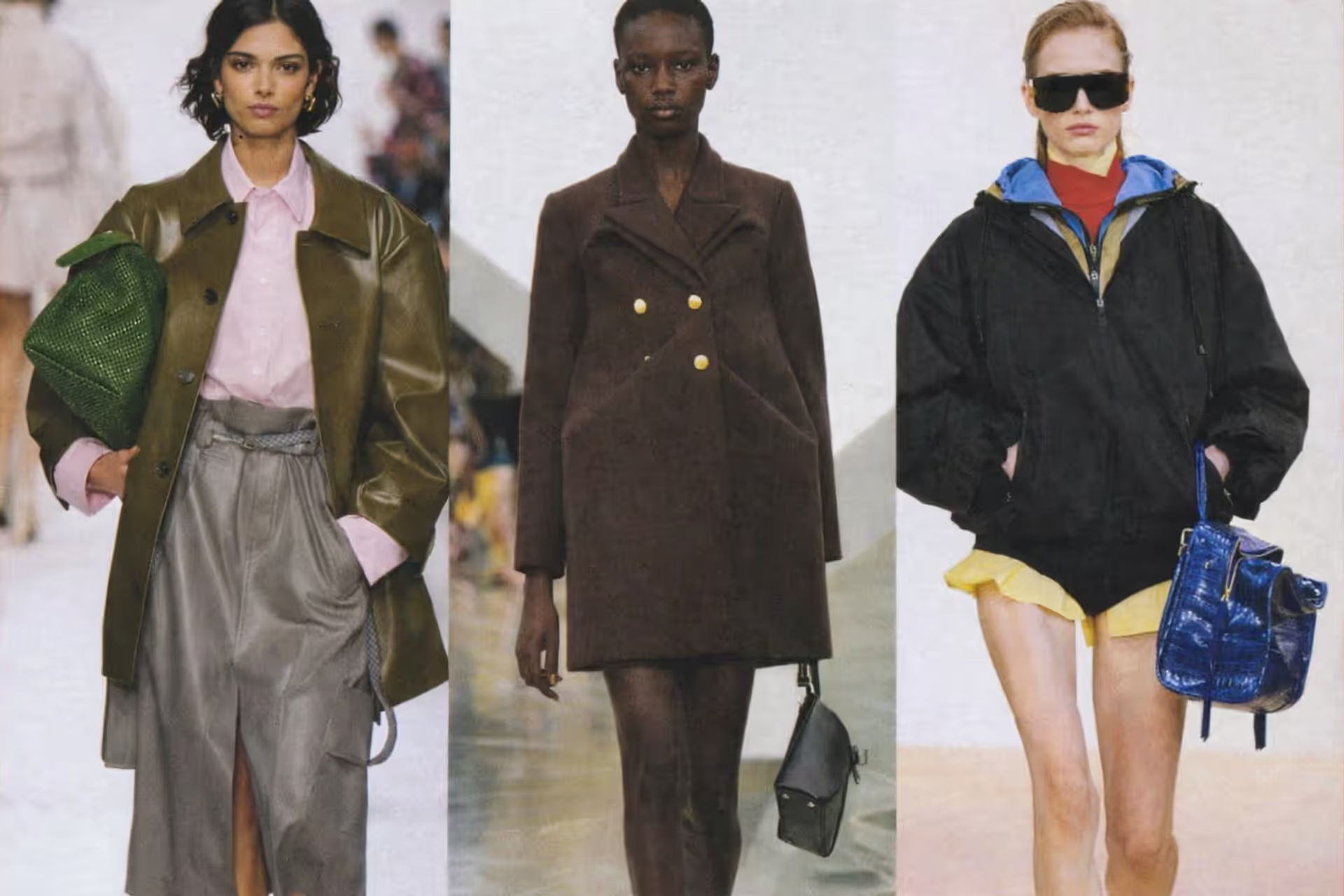
2026 offers something different. Not a single dominant trend but a constellation of movements, each reflecting deeper shifts in how Americans relate to clothing, identity, and the cultures they inhabit. The runway shows in Paris, Milan, New York, and London have presented their visions, and trend forecasters at organizations like WGSN have synthesized the data. But the real story isn't in any single collection or color prediction. It's in the convergence of emotional, social, and aesthetic currents that are reshaping what fashion means in contemporary American life.
This is the year fashion gets personal—not in the superficial sense of customization or monogramming, but in the profound sense of clothing as emotional architecture. What we wear in 2026 will speak less to trend awareness and more to internal states: the desire for calm in chaos, the hunger for narrative in a fragmented world, the need to signal values without shouting them.
The trends emerging for 2026 aren't costumes to put on. They're languages to learn.
The Top 2026 Fashion Trends: A New Visual Vocabulary
Understanding the top 2026 fashion trends requires looking beyond the obvious categories of color and silhouette—though we'll address those too—to see the underlying grammar that connects disparate elements into a coherent visual vocabulary. This year's trends share certain characteristics: they reward intention over impulse, they favor investment over accumulation, and they suggest that American fashion is maturing into something more considered than the fast-fashion cycle has permitted.
The Return of Deliberate Dressing
Perhaps the most significant shift in 2026 fashion trends is the return of deliberate dressing—the idea that getting dressed is an act worthy of thought rather than a reflexive morning scramble. This represents a cultural correction after years of athleisure dominance and work-from-home casualness. Deliberate dressing doesn't mean formality. It means intentionality.
The practical expression of this trend appears in several ways:
- Structured shoulders have returned across categories, from blazers to dresses to outerwear. Not the aggressive power shoulders of the 1980s but a softer architectural emphasis that creates presence without aggression. Designers like The Row and Khaite have championed this silhouette, and it's filtering down to accessible brands.
- Defined waistlines are reasserting themselves after years of oversized and boxy silhouettes. This isn't about body-consciousness in the revealing sense but about acknowledging the body's natural architecture. Belted coats, nipped blazers, and high-waisted trousers all express this preference.
- Finishing details that indicate care—hand-stitched buttonholes, lined pockets, quality hardware—are becoming visible markers of value. American consumers increasingly recognize these details and are willing to pay for them, understanding that craftsmanship translates to longevity.
The deliberate dressing movement reflects a broader American fatigue with disposability. When everything feels ephemeral—digital content, news cycles, relationships conducted through apps—clothing that suggests permanence and consideration provides psychological grounding.
Soft Power: The Dominance of Gentle Silhouettes
The silhouette story of 2026 is one of softness deployed strategically. Hard edges have given way to gentle curves, fluid draping, and what might be called "architectural softness"—garments with clear structure that nonetheless move and breathe with the body.
This manifests across categories:
Cocooning outerwear wraps the body in generous volumes without bulk. Think blanket coats, oversized wool wraps, and quilted pieces that suggest comfort without sacrificing sophistication. Toteme and Max Mara have excelled in this category, creating outerwear that functions almost as portable environments.
Fluid trousers have definitively displaced the skinny jean as the default bottom. Wide-leg, pleated, and softly tailored trousers dominate from luxury houses to mall brands. The American consumer has embraced this silhouette for its comfort and flattery across body types.
Draped dresses in matte jersey, silk, and crepe offer an alternative to the structured fits that dominated previous years. These pieces move with the wearer, suggesting ease rather than effort while still reading as polished.
The soft silhouette trend connects to the broader wellness culture that continues to shape American lifestyle. Clothing that restricts, pinches, or requires constant adjustment contradicts the values of self-care and mindful living that have become mainstream. The most desirable garments of 2026 feel good to wear for hours, not just to photograph.
Material Intelligence: The Fabric Story
The materials conversation in 2026 fashion trends reflects both sustainability concerns and a renewed appreciation for sensory experience. After years of synthetic performance fabrics dominating activewear and filtering into everyday clothing, natural fibers are experiencing a meaningful renaissance.
Wool in all its variations—merino, cashmere, mohair, alpaca—leads the natural fiber resurgence. American consumers are learning to appreciate wool's temperature-regulating properties, longevity, and the tactile pleasure of quality knits. Brands like Everlane and Naadam have built substantial businesses on making quality wool accessible.
Linen and linen blends are expanding beyond summer into year-round wardrobes. The fabric's characteristic texture, once considered too casual for certain contexts, now reads as sophisticated and intentional. Belgian linen from heritage mills commands premium prices, and American consumers are learning the difference.
Leather and suede maintain their presence but with increasing attention to sourcing and tanning processes. Vegetable-tanned leathers and leather alternatives derived from mushroom mycelium or apple waste are gaining traction among eco-conscious consumers.
Silk retains its position as the ultimate luxury fiber, with designers emphasizing weight, weave, and origin. Silk shirts, scarves, and linings distinguish quality garments from their lesser counterparts.
The material intelligence trend reflects American consumers' growing sophistication. Fast fashion trained shoppers to ignore fabric composition in favor of trend and price. The correction involves relearning how to assess quality through touch, drape, and construction—skills that previous generations took for granted.
Color: The Palette of Presence
Author: Lauren Whitfield;
Source: lucyandcoboutique.com
The color story for 2026 moves away from the muted neutrals that defined quiet luxury toward a more emotionally varied palette. This doesn't mean the return of maximalist color chaos but rather a thoughtful expansion of the chromatic range.
Key colors for 2026 include:
- Oxblood and burgundy: Deep, wine-inflected reds that feel sophisticated rather than aggressive. These colors work as neutrals while providing more visual interest than black or navy.
- Butter and cream: Warmer whites that flatter more skin tones than stark white and suggest approachability without sacrificing elegance.
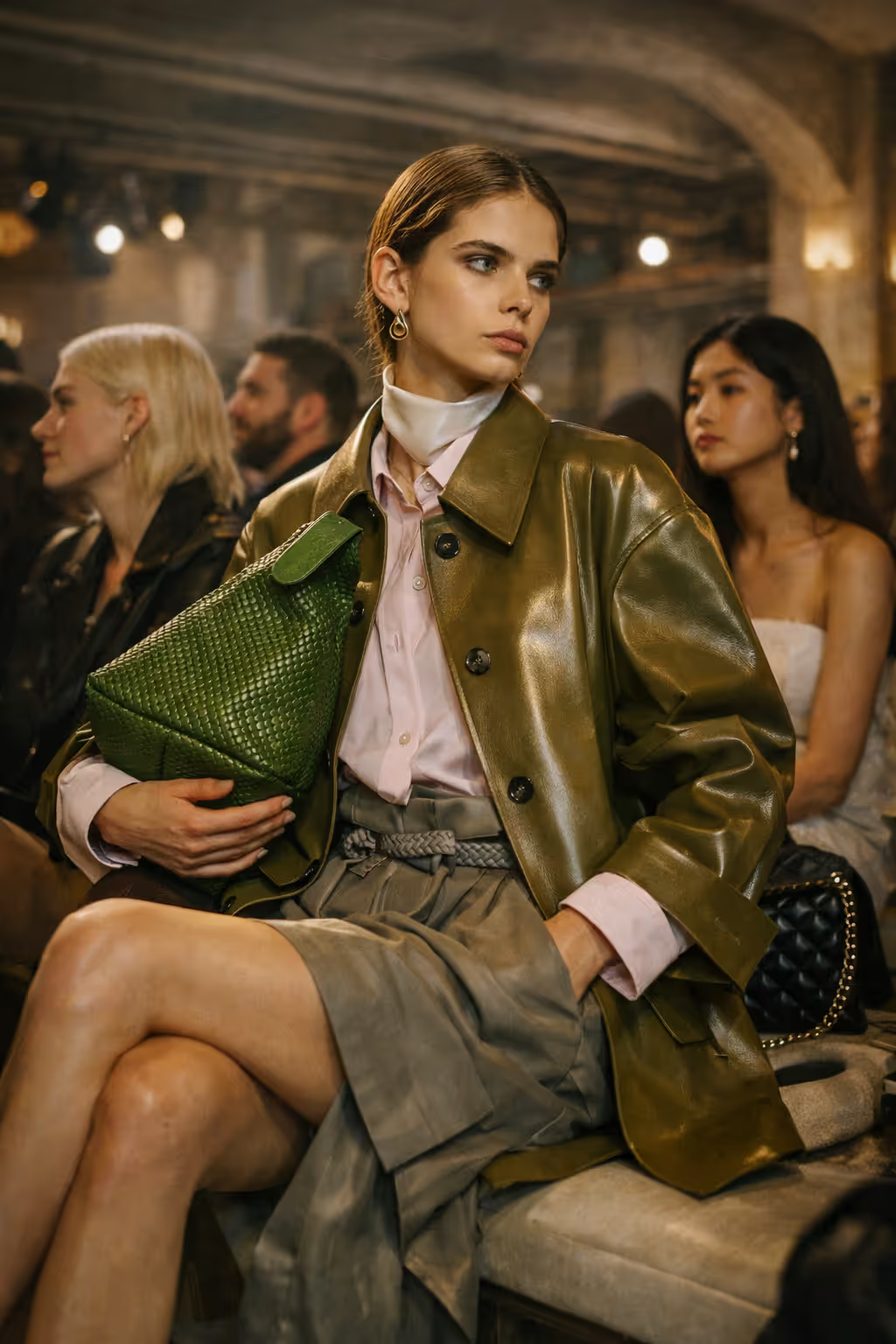
- Forest and moss greens: Nature-derived greens that connect to sustainability values while offering unexpected alternatives to blue and grey.
- Terracotta and rust: Warm earth tones that complement diverse complexions and suggest grounded authenticity.
- Soft lavender and lilac: Approachable purples that provide femininity without saccharine sweetness.
The color trend in American fashion also includes a sophisticated use of black—not the flat, undifferentiated black of fast fashion but textured, dimensional black achieved through fabric variation and layering. All-black dressing retains its position in American wardrobes, but the execution has evolved to emphasize material contrast and silhouette interest.
Print and Pattern: Quiet Maximalism
Pattern in 2026 occupies an interesting middle ground between the print-mixing maximalism of recent years and the pattern-averse minimalism that preceded it. The result might be called quiet maximalism—prints that create visual interest without overwhelming.
Dominant patterns include:
- Micro-florals and botanical prints rendered in sophisticated colorways rather than candy-bright hues. Think vintage botanical illustrations translated to silk scarves and blouse fabrics.
- Updated plaids and checks in unexpected color combinations. Traditional patterns like glen plaid and windowpane reappear with contemporary color updates.
- Geometric abstraction in the form of painterly prints that read almost as texture rather than distinct pattern.
- Heritage prints from archival fashion house collections, reissued with contemporary colorways and applications.
The approach to pattern in 2026 emphasizes integration over statement. A printed blouse might be the only pattern in an otherwise solid-colored outfit, serving as focal point rather than competing element. This restraint makes pattern more versatile and accessible for American consumers who previously avoided prints entirely.
Fashion As Feeling: The Emotional Logic of 2026 Style
The most significant shift in 2026 fashion trends isn't visible in any single garment or collection. It's a change in how fashion functions emotionally—a movement from fashion as external performance to fashion as internal regulation.
Dressing for the Inner Weather
American culture has developed an increasingly sophisticated vocabulary for discussing emotional and psychological states. Therapy has become mainstream. Mental health awareness has destigmatized discussions of anxiety, depression, and stress. Mindfulness practices have moved from fringe to mainstream.
Fashion is catching up.
The concept of dressing for your inner weather means choosing clothing based on emotional needs rather than external requirements alone. Bad day? Soft cashmere provides comfort. Important presentation? Structured blazer builds confidence. Overwhelming schedule? Streamlined outfit reduces decision fatigue.
Clothing has always shaped how we feel about ourselves, but now people are finally dressing with that awareness.
— Dr. Adam Galinsky, social psychologist, researcher of enclothed cognition
This isn't new—humans have always dressed to affect their moods. What's new is the conscious articulation of this practice and the design responses it's generating.
Tactile comfort has become a legitimate design criterion. Designers describe fabrics in terms of how they feel against skin, not just how they photograph. Interior seams are finished to eliminate scratching. Waistbands are engineered to avoid digging.
Color psychology informs design decisions explicitly. Collections are described in terms of the emotional states their palettes evoke—calm, energized, grounded, expansive. Fit engineering prioritizes ease of movement and all-day wearability. Garments are tested for real-life scenarios: Can you raise your arms? Sit comfortably? Move without adjustment?
The Confidence Equation
Research from institutions studying enclothed cognition—the psychological effects of clothing on the wearer—has begun filtering into mainstream consciousness. Americans increasingly understand that what they wear affects how they think, feel, and perform.
The confidence equation in 2026 fashion involves several variables:
- Fit precision matters more than ever. Ill-fitting clothing, regardless of price or quality, undermines confidence. The alterations business is growing as consumers recognize that off-the-rack rarely means ready-to-wear.
- Contextual appropriateness provides confidence through belonging. Dressing for the occasion—not overdressed, not underdressed—allows attention to focus outward rather than on self-consciousness about appearance.
- Personal authenticity trumps trend compliance. The most confident dressers wear what genuinely reflects their aesthetic preferences rather than what magazines or influencers prescribe.
- Quality assurance eliminates the subtle anxiety of potential failure. Will this seam hold? Will this fabric pill? Will this shoe fall apart? Quality garments remove these background worries.
Emotional Durability
The concept of emotional durability—how long a garment remains satisfying to own and wear—is emerging as a consideration alongside physical durability. A well-made garment that you tire of in one season offers less value than a simpler piece that continues to please year after year.
Emotional durability depends on several factors:
- Timeless design that doesn't scream its season of origin
- Versatility that allows multiple styling contexts
- Personal resonance with the wearer's identity and values
- Positive associations accumulated through wearing
American consumers are beginning to evaluate purchases through this lens, asking not just "Will this last?" but "Will I still want to wear this?" The distinction matters for both sustainability and satisfaction.
Lady of Leisure: The Aesthetic of Expansive Time
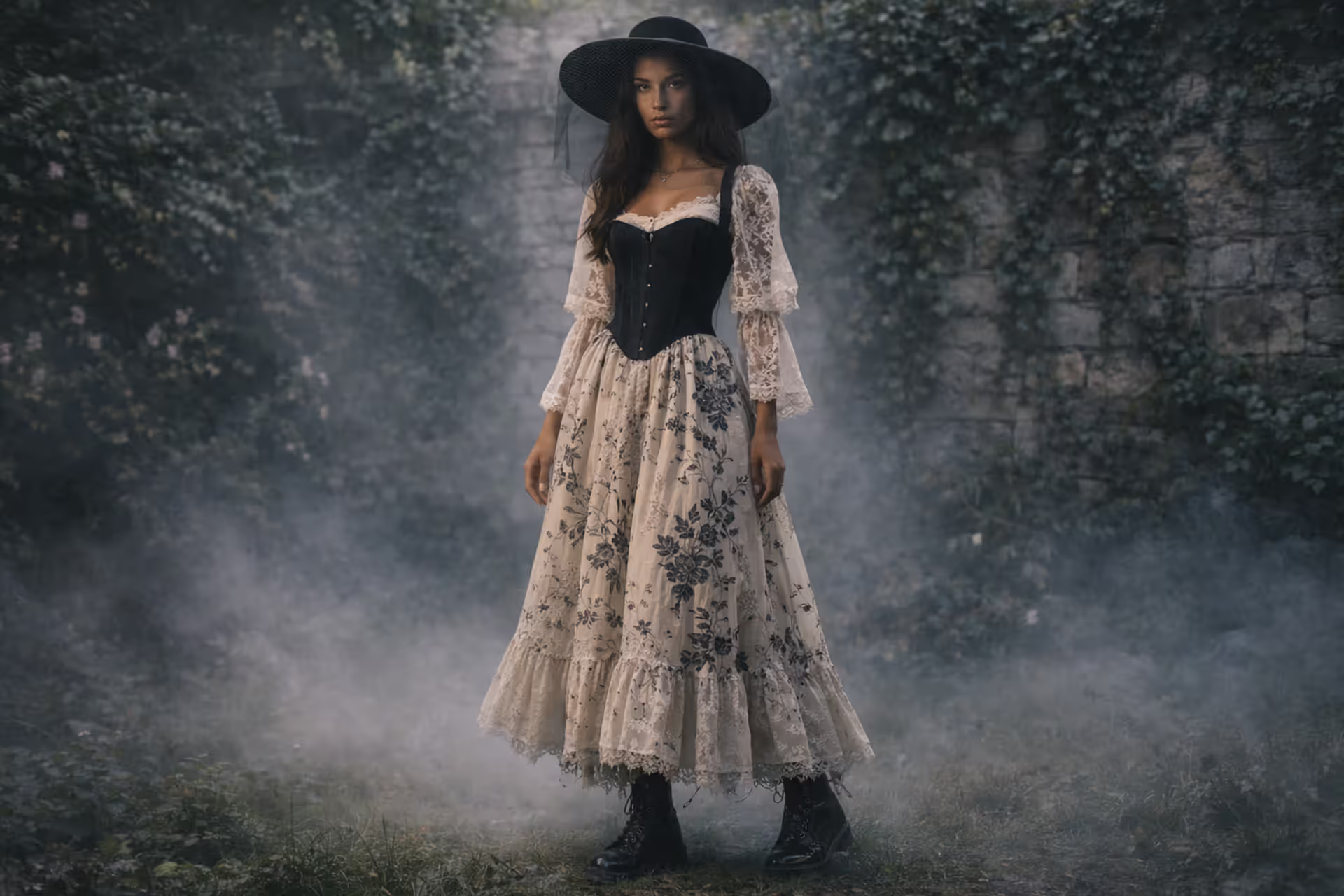
Among the most compelling aesthetic movements in 2026 fashion trends is what might be called Lady of Leisure—a visual vocabulary suggesting unhurried existence, cultivation of the self, and freedom from the tyranny of productivity culture.
Luxury today is increasingly defined by time — time to make, time to wear, and time to care.
— Dana Thomas, fashion journalist and author
The Lady of Leisure aesthetic emerges from several cultural tributaries. There's the influence of old-money imagery, popularized by social media accounts documenting aristocratic European lifestyles. There's the reaction against hustle culture, which dominated American aspiration for a decade before burning out. There's the post-pandemic reassessment of time and its proper uses.
What distinguishes Lady of Leisure from mere wealth signaling is its emphasis on time rather than money. The aesthetic suggests not "I can afford this" but "I have the luxury of unhurriedness." This is a powerful message in a culture where busyness has functioned as status marker.
Visual Markers of the Leisure Aesthetic
The Lady of Leisure look has specific visual characteristics that communicate its message:
- Flowing silhouettes that suggest movement without destination. Wide-leg trousers, maxi skirts, and billowing dresses all evoke a figure with nowhere particular to rush.
- Tactile luxury in the form of cashmere, silk, and fine cotton. These fabrics require care, suggesting a life with time for maintenance rituals.
- Quiet accessories like silk scarves, quality sunglasses, and understated jewelry. Nothing that screams for attention; everything that rewards closer inspection.
- Grooming that suggests investment without obvious effort. Clean, healthy hair and skin rather than elaborate styling. Manicured nails in neutral tones rather than elaborate nail art.
- Footwear designed for comfort without sacrificing elegance. Low heels, quality loafers, and refined flats replace the uncomfortable shoes that suggest submission to fashion's demands.
Leisure as Rebellion
In the American context, embracing leisure aesthetics carries subtle revolutionary charge. American culture venerates productivity, hustle, and visible effort. To present oneself as unhurried, as having time for reading, walking, and contemplation, pushes against cultural expectations.
The Lady of Leisure aesthetic thus functions as both aspiration and critique. It visualizes an alternative to the productivity treadmill while implicitly questioning whether constant busyness serves human flourishing.
For American women especially, the aesthetic offers permission. Permission to slow down. Permission to prioritize cultivation over accumulation. Permission to value being over doing.
Adapting Leisure Aesthetics for American Life
The challenge for most American women is translating Lady of Leisure aesthetics into lives that include jobs, children, errands, and obligations that aristocratic ladies never contemplated. The adaptation requires strategic thinking:
- Invest in key pieces that instantly communicate the aesthetic. A quality cashmere wrap, a silk scarf, a pair of elegant flats can transform otherwise ordinary outfits.
- Choose ease over restriction whenever possible. The aesthetic is about comfort and flow, so bodycon dresses and restrictive tailoring contradict its message.
- Edit ruthlessly to create the impression of considered selection. The leisure aesthetic abhors obvious trying. A closet of fewer, better things reads as leisurely curated rather than desperately accumulated.
- Embrace quality basics that function as canvas for leisure signals. Well-cut trousers, perfect white shirts, and quality knitwear provide foundation.
- Allow time for appearance paradoxically by simplifying routine. The groomed-but-effortless look requires more attention to skin, hair, and nail health but less time on daily styling.
Literary Chic: Dressing for the Life of the Mind
Parallel to Lady of Leisure, 2026 fashion trends include a distinct aesthetic that might be called Literary Chic—clothing that suggests intellectual engagement, creative depth, and cultural participation beyond the fashion sphere.
Literary Chic responds to several contemporary conditions. Digital culture has created hunger for tangible intellectual markers—actual books, handwritten notes, analog pursuits. The influencer economy has produced backlash in the form of yearning for substance over surface. The crisis of meaning in late capitalism drives interest in aesthetic systems that suggest inner richness.
The Literary Chic aesthetic says: I think, I read, I engage with culture. I am not merely a consumer of trends but a participant in conversations that predate and will outlast any fashion season.
Visual Elements of Literary Style
Literary Chic has recognizable elements that communicate its intellectual associations:
Scholarly silhouettes borrowed from academic traditions: tweed blazers, pleated trousers, cardigan sweaters, oxford shirts. These pieces evoke libraries, lectures, and contemplative work.
Rich textures in autumnal tones: burgundy velvet, forest green corduroy, brown leather, cream wool. The palette suggests book-lined rooms and afternoon light.
Thoughtful accessories that function as conversation pieces: vintage brooches, interesting eyewear, watches with history, bags that could plausibly carry books.
Modest necklines and hemlines that suggest dress codes more concerned with warmth and comfort than display. This isn't prudishness but practicality—the aesthetic of someone who has other things on her mind.
Layering for interest creates visual complexity that rewards attention. A blouse under a sweater under a blazer provides the kind of depth that suggests a corresponding inner life.
Literary Chic and American Identity
In the American context, Literary Chic connects to specific cultural traditions. There's the New England intellectual heritage—the Ivies, the literary salons, the Boston Brahmin cultivation of the mind. There's the New York editorial world—the elegant women who run literary magazines and publishing houses. There's the California academic variant—more relaxed but equally bookish.
For many American women, Literary Chic offers aspirational identity that doesn't depend on wealth or youth. The aesthetic suggests that interest and cultivation matter more than resources or age. A brilliant seventy-year-old in tweed and interesting eyeglasses commands more respect in this system than a vapid twenty-year-old in expensive labels.
Building a Literary Wardrobe
Creating a Literary Chic wardrobe involves both specific pieces and overall approach:
Foundation pieces include:
- Quality blazers in tweed, herringbone, or solid wool
- Well-cut trousers in versatile colors
- Oxford shirts and silk blouses
- Crew neck and cardigan sweaters in fine gauge knits
- Leather accessories with patina potential
- Comfortable, elegant flats and low boots
The approach involves:
- Buying for longevity over trend compliance. Literary Chic pieces should improve with age.
- Mixing price points intelligently. A vintage blazer, contemporary trousers, and quality accessories can cost less than head-to-toe designer while looking more considered.
- Prioritizing fit obsessively. The aesthetic depends on garments that drape correctly and move with the body.
- Building slowly rather than assembling quickly. The Literary Chic wardrobe should look collected over time, not purchased in a single shopping spree.
- Incorporating actual intellectual accessories—interesting books, quality notebooks, fountain pens—that complement the clothing story.
Lady of Leisure and Literary Chic share considerable overlap, and many American women will find their personal style in the intersection. Both aesthetics value cultivation over acquisition, time over money, depth over surface. Both reject obvious trend-chasing in favor of personal expression within established parameters.
The combined aesthetic might dress in flowing cashmere while reading in a leather club chair, or walk through a garden in tweed and elegant flats. The common thread is the suggestion of a life with space for beauty, thought, and unhurried experience.
The Future of Fashion: Sustainability, Technology, and Meaning
No discussion of 2026 fashion trends would be complete without addressing the structural forces reshaping the industry. Sustainability, technology, and the search for meaning beyond consumption all influence what Americans will wear and how they'll acquire it.
Sustainability Becomes Non-Negotiable
The sustainability conversation in fashion has shifted from niche concern to mainstream expectation. American consumers, particularly younger generations, increasingly consider environmental and ethical factors when making purchase decisions.
The Business of Fashion and other industry publications document how sustainability has moved from marketing nice-to-have to business necessity. Brands that cannot articulate credible sustainability stories face growing consumer skepticism.
Key sustainability trends in 2026 include:
- Circularity systems that allow garment return, resale, and recycling. Brands like Eileen Fisher and Patagonia have pioneered these systems, and larger players are following.
- Transparency about supply chains, manufacturing conditions, and environmental impact. QR codes linking to production information are becoming standard.
- Natural and regenerative fibers that sequester carbon rather than releasing it. Wool from regeneratively managed sheep, linen from sustainable flax cultivation, and cotton from organic farming all command premiums.
- Longevity design that prioritizes durability over planned obsolescence. Some brands now offer repair services and guarantee their products for years or decades.
- Rental and resale integration into traditional retail. Trying before buying, renting for occasions, and trading in for credit are becoming normal acquisition modes.
Technology's Invisible Hand
Technology continues reshaping fashion in ways both visible and invisible to consumers:
Sizing technology uses artificial intelligence and body scanning to improve fit accuracy. Apps can now recommend sizes across brands with increasing precision, reducing returns and improving satisfaction.
Fabric innovation produces materials with unprecedented performance characteristics—temperature regulation, moisture management, wrinkle resistance—without sacrificing natural aesthetics.
Manufacturing automation enables closer-to-demand production, reducing waste from unsold inventory. Some brands now produce to order, eliminating overproduction entirely.
Virtual try-on allows consumers to visualize garments on their bodies before purchase, reducing the uncertainty that drives both over-ordering and hesitation.
Authentication technology combats counterfeiting through blockchain tracking and embedded verification, protecting both brands and consumers.
The Search for Meaning
Perhaps the deepest current in 2026 fashion trends is the search for meaning beyond mere consumption. Americans increasingly want their fashion choices to signify something—values, identity, belonging—rather than serving as empty status displays.
This search manifests in several ways:
- Brand alignment with causes and values matters. Consumers want to know what brands stand for beyond making money.
- Community connection through shared aesthetic affiliations provides belonging. Dressing in recognizable styles connects wearers to others who share their values.
- Personal narrative drives individual expression. Clothing becomes a way of telling your story, not just following someone else's script.
- Quality relationships with fewer, better brands replace promiscuous trend-chasing. Consumers develop loyalty to brands that consistently deliver on their promises.
- Craft appreciation values human skill and traditional techniques. Handmade, artisanal, and locally produced garments carry meaning that mass production cannot provide.
Modern Luxury Fashion: Redefining What Premium Means
Author: Lauren Whitfield;
Source: lucyandcoboutique.com
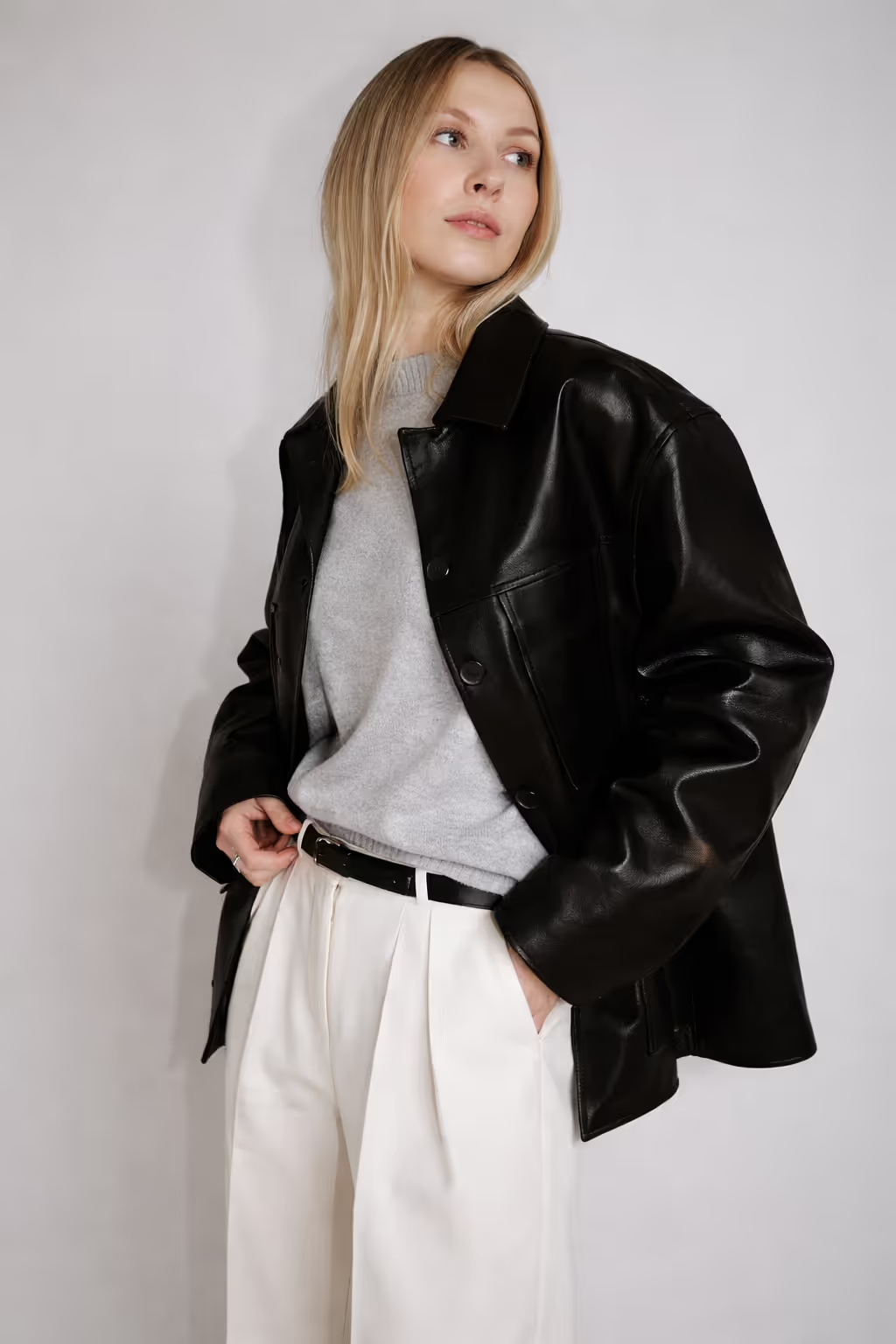
The concept of luxury is being redefined in ways that affect how Americans approach premium fashion. Traditional luxury markers—logos, high prices, exclusive availability—are giving way to more nuanced signals.
Modern luxury fashion in 2026 prioritizes:
Material excellence over brand recognition. The quality of fiber, construction, and finish matters more than whose name is on the label.
Design intelligence that solves real problems. Luxury garments should fit better, wear longer, and function more effectively than lesser alternatives.
Ethical production that respects workers and environments. True luxury cannot be extracted from exploitation.
Timeless appeal that transcends seasonal trends. Luxury pieces should reward long ownership, not demand constant replacement.
Emotional resonance that connects wearer to garment. The most luxurious possessions are those we genuinely love, not those we bought to impress others.
Quiet Luxury Evolves
The quiet luxury trend that dominated recent seasons continues evolving in 2026. The original impulse—rejecting loud logos in favor of understated quality—remains, but the execution has become more sophisticated.
2026 quiet luxury involves:
- Texture as statement: Using material excellence rather than design complexity to signal quality
- Fit precision: Achieving the kind of perfect drape that only quality construction provides
- Detail attention: Appreciating the small elements—buttons, linings, seams—that distinguish quality
- Versatility: Valuing pieces that work across multiple contexts and combinations
- Longevity: Choosing garments designed to last decades, not seasons
Accessible Luxury Options
The democratization of quality means American consumers can access excellent clothing without designer price tags. Understanding where quality exists across price points allows strategic building of luxurious wardrobes.
Quality accessible brands include:
- Quince for cashmere, silk, and leather at fraction of traditional luxury prices
- & Other Stories for contemporary design with attention to fabric and construction
- Arket for Scandinavian minimalism with quality materials
- COS for architectural design and interesting textiles
- Everlane for transparency about production and pricing
Women's Style 2026: Practical Application
Understanding trends intellectually differs from applying them practically. American women want to know: How do I actually dress in 2026?
Building the 2026 Wardrobe. A well-constructed wardrobe for 2026 might include:
Foundation pieces:
- Wide-leg trousers in two or three neutral colors
- Quality blazers with soft structure
- Silk or fine cotton blouses in versatile shades
- Cashmere or merino sweaters in crew and cardigan styles
- A cocooning coat for colder months
- Comfortable, elegant shoes in multiple styles
Statement pieces:
- One or two items in the season's key colors (oxblood, forest green, butter)
- A single printed piece (scarf, blouse, or skirt) for pattern interest
- An accessory that functions as conversation piece
Lifestyle-specific additions:
- Professional contexts may require more structured pieces
- Active lifestyles need elevated casual options
- Social calendars determine evening and event needs
Shopping Strategy for 2026
Strategic shopping maximizes wardrobe quality while minimizing waste:
Before shopping:
- Audit existing wardrobe honestly
- Identify actual gaps versus perceived desires
- Research options across price points
- Consider rental for trend experiments
While shopping:
- Prioritize fit above all other considerations
- Handle fabric and assess construction
- Check interior finishing and details
- Consider cost-per-wear, not just price
- Buy less, but better
After shopping:
- Invest in alterations for imperfect fits
- Care for garments properly to extend life
- Track what gets worn and what doesn't
- Sell or donate what doesn't work
Style as Practice
Ultimately, American fashion trends in 2026 suggest that style is less a destination than a practice—something cultivated over time through attention, experimentation, and self-knowledge.
The best-dressed women in 2026 won't necessarily own the most expensive clothes or follow trends most closely. They'll be the women who understand themselves clearly, who know what makes them feel confident and capable, and who dress with intention rather than anxiety.
Fashion as practice means:
- Paying attention to what actually works in your life
- Experimenting with new ideas while maintaining core identity
- Learning from mistakes without self-judgment
- Evolving as circumstances and preferences change
- Enjoying the process rather than treating it as obligation
Conclusion: Fashion Forward
The 2026 fashion trends surveyed here share certain underlying characteristics. They value intention over impulse, quality over quantity, personal expression over herd compliance. They respond to contemporary anxieties—about sustainability, authenticity, and meaning—while offering aesthetic pleasure that transcends mere utility.
For American women navigating these trends, the opportunity lies not in slavish trend adoption but in thoughtful curation. The most stylish response to 2026's offerings involves understanding what these trends mean, selecting what resonates personally, and integrating new ideas with existing style identities.
Lady of Leisure offers permission to slow down, to value cultivation over accumulation. Literary Chic suggests that intellectual engagement and aesthetic sophistication can coexist. The broader trends toward soft silhouettes, natural materials, and emotional dressing all point toward fashion that serves life rather than demanding sacrifice to its altar.
The future of fashion, as expressed in 2026's directions, looks surprisingly humane. After years of exhausting trend cycles and unsustainable consumption, the fashion world seems to be discovering what thoughtful consumers have long known: the best clothes are those that make you feel like yourself, that last beyond their moment of purchase, and that contribute to rather than detract from the life you're trying to build.
That's a future worth dressing for.
Related Stories
Read more
Read more

The content on lucyandcoboutique.com is provided for general informational and inspirational purposes only. It is intended to showcase fashion trends, style ideas, and curated collections, and should not be considered professional fashion, styling, or personal consulting advice.
All information, images, and style recommendations presented on this website are for general inspiration only. Individual style preferences, body types, and fashion needs may vary, and results may differ from person to person.
Lucyandcoboutique.com is not responsible for any errors or omissions, or for actions taken based on the information, trends, or styling suggestions presented on this website.