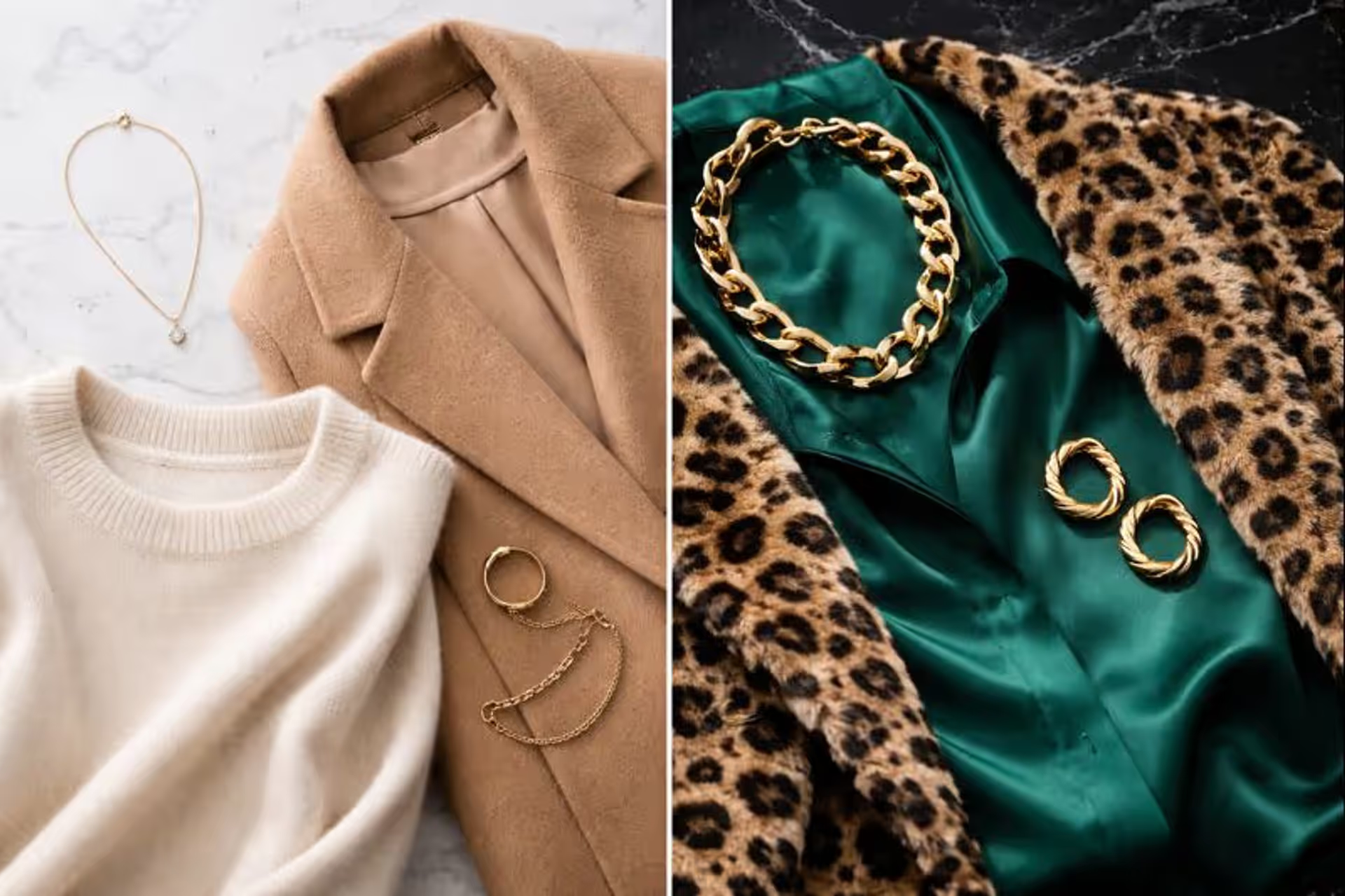
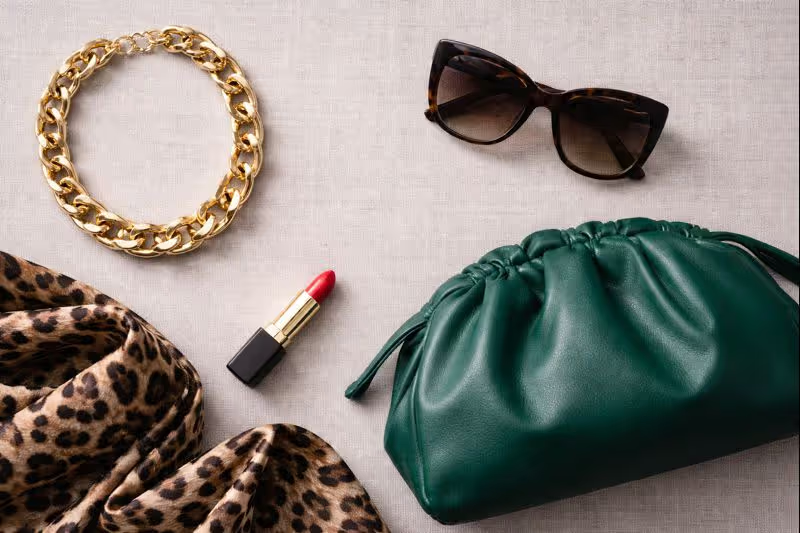
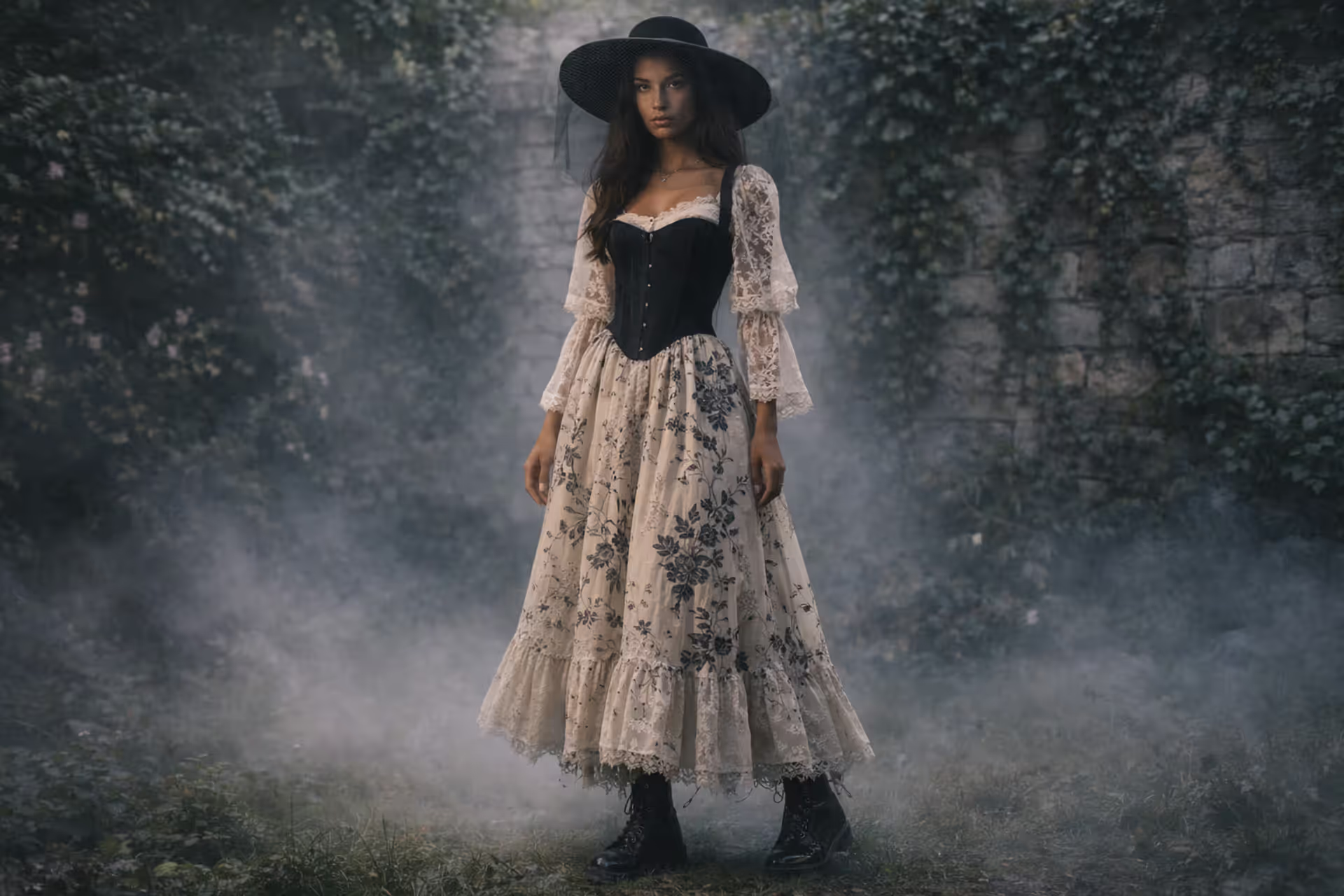
Side-by-side comparison showing quiet luxury essentials in neutral tones alongside bold statement pieces, illustrating the two distinct approaches to personal style.
Quiet Luxury vs Statement Pieces: Which Trend Fits Your Lifestyle?
Two dominant philosophies compete for attention in contemporary fashion. On one side: quiet luxury—the art of understated elegance, where quality whispers rather than shouts and status signals through craftsmanship rather than logos. On the other: statement dressing—bold choices that announce presence, express personality loudly, and treat clothing as creative canvas rather than social camouflage.
Neither approach is inherently superior. Both can produce beautiful, confident personal style when executed well—and both can fail spectacularly when misapplied to lives they don't fit. The question isn't which is "better" but which serves you: your lifestyle, your goals, your personality, your circumstances.
This distinction has intensified recently as fashion media amplifies the quiet luxury conversation while statement dressing maintains its cultural presence. Social media feeds showcase both extremes—the Instagram grid of perfectly minimal beige and the TikTok maximalist showing their latest bold find. The noise makes personal choice harder; understanding both approaches clearly helps you navigate toward authentic expression.
This guide examines both approaches in depth—their characteristics, advantages, disadvantages, and ideal contexts—then helps you assess which direction (or combination) serves your specific situation.
Understanding Quiet Luxury
Quiet luxury fashion has dominated recent fashion conversation, championed by luxury houses pivoting away from logos and embraced by consumers seeking sophistication without ostentation. Understanding what quiet luxury actually means—beyond the buzzword—helps you evaluate whether it fits your life.
The Core Philosophy
Quiet luxury prioritizes quality over visibility. The aesthetic centers on exceptional materials, impeccable construction, and timeless design rather than brand recognition or trend-following. A quiet luxury wardrobe features cashmere rather than polyester, perfect tailoring rather than current silhouettes, and colors that flatter rather than demand attention.
The underlying principle is confidence through understatement. You don't need external validation of your taste or success; the quality speaks for itself to those who understand it, and you don't care whether others notice. This philosophy appeals to those comfortable with subtle status signals—or those who've moved past status signaling entirely.
Quiet luxury draws from "old money" aesthetics historically associated with inherited wealth that didn't need to prove itself. Whether or not you have generational wealth, the aesthetic borrows that sensibility: dressing well is simply how things are done, not a performance requiring audience appreciation.
“The biggest mistake I see clients make is adopting a style philosophy that doesn't match their actual personality. Someone who loves color and pattern forcing themselves into beige minimalism is just as inauthentic as someone naturally reserved trying to make bold statements. The goal is alignment between who you are and how you present yourself.”
Visual Characteristics
Recognizing quiet luxury helps you determine whether it resonates:
Color palette: Neutrals dominate—cream, camel, navy, charcoal, black, white, soft grey, chocolate brown. Colors that recede rather than advance, complement rather than compete, and coordinate effortlessly with each other.
Materials: Natural fibers of obvious quality—cashmere, fine wool, silk, quality leather, linen. Fabrics that feel exceptional against skin and improve with age rather than degrading.
Construction: Impeccable tailoring, clean seams, quality hardware, thoughtful details invisible to casual observation. The craft evident to those who look closely.
Branding: Minimal to nonexistent visible logos. Designer pieces chosen for quality rather than recognition. The brand serves the wearer rather than the wearer advertising the brand.
Silhouettes: Classic, flattering cuts that transcend seasonal trends. Proportions that work on your body rather than replicating runway looks.
Accessories: Simple, quality pieces—fine jewelry, unadorned leather goods, watches valued for craftsmanship over status signaling.
The Appeal of Quiet Luxury
Quiet luxury attracts for several reasons:
Longevity: Timeless pieces don't date, reducing the replacement cycle and cost-per-wear over time. A quality cashmere coat from 2015 looks current today; a trend-forward statement coat from 2015 probably doesn't.
Versatility: Neutral, classic pieces combine endlessly. A capsule wardrobe built on quiet luxury principles multiplies outfit possibilities while minimizing closet chaos.
Professionalism: The aesthetic translates seamlessly across professional contexts. Quiet luxury reads as appropriate whether you're meeting clients, interviewing for positions, or navigating corporate environments.
Aging gracefully: The look works across decades of life without requiring reinvention. What suits you at 30 still suits you at 50 and 70 with minor adjustments.
Reduced decision fatigue: When everything coordinates and nothing demands attention, getting dressed becomes simpler. You're not performing through clothing; you're simply dressed well.
Investment mindset: Spending more on fewer, better pieces aligns with financial prudence. The wardrobe becomes an asset that holds value rather than a depreciating consumption category.
The Limitations of Quiet Luxury
Honest assessment requires acknowledging drawbacks:
Personality suppression: For naturally expressive people, enforced understatement can feel like self-erasure. If you genuinely love color, pattern, or bold design, quiet luxury may silence rather than serve you.
Sameness risk: Executed without individuality, quiet luxury produces interchangeable wardrobes. The aesthetic can become uniform rather than personal—a different kind of conformity than trend-following but conformity nonetheless.
Access barriers: Genuine quiet luxury—truly exceptional materials and construction—costs significantly. The aesthetic is easier to achieve with substantial budgets; budget versions risk looking cheap rather than understated.
Context mismatch: In creative fields, artistic communities, or cultures that celebrate self-expression, quiet luxury may read as boring, repressed, or out of touch. The "appropriate everywhere" claim fails in contexts that value bold expression.
Invisibility: If part of your goal is being noticed—professionally, socially, or personally—quiet luxury works against you. The aesthetic's strength (not demanding attention) becomes weakness when attention serves your purposes.
Understanding Statement Dressing
Statement piece style occupies the opposite end of the spectrum—clothing and accessories chosen specifically to attract attention, express personality, or make visual impact. Understanding this approach with equal depth prevents dismissing it as merely "loud" or “trying too hard.”
Statement dressing treats fashion as expression rather than mere covering. Clothing becomes medium for communicating personality, mood, creativity, or affiliation. The underlying principle is that what you wear matters beyond function—it's a form of self-expression deserving the same intentionality as other creative choices.
This philosophy draws from artistic traditions, subcultural identities, and the simple observation that human beings have always adorned themselves for reasons beyond warmth. Statement dressers often view the quiet luxury emphasis on invisibility as denial of fashion's expressive potential—why have beautiful, interesting options if everyone dresses alike?
Statement dressing doesn't require maximalism in all contexts. The approach might mean one bold piece against otherwise neutral foundation—the dramatic coat, the striking jewelry, the unexpected shoe. It's about intentional visual impact rather than volume of decoration.
Visual Characteristics
Statement dressing encompasses wide variety, but common elements include:
Color: Bold, saturated hues; unexpected combinations; colors chosen for impact rather than coordination. Willingness to wear what's striking rather than what's safe.
Pattern: Prints, graphics, textures that draw the eye. Mixing patterns confidently. Using visual complexity rather than avoiding it.
Silhouettes: Fashion-forward shapes that reference current or historical moments. Proportions that create drama rather than merely flattering.
Accessories: Statement jewelry, eye-catching bags, distinctive shoes, bold eyewear. Accessories as focal points rather than afterthoughts.
Branding and logos: Variable—some statement dressers embrace obvious branding as part of the aesthetic; others achieve impact through design rather than recognition.
Uniqueness: Vintage, designer, custom, or unusual pieces that differentiate from mass-market uniformity. The thrill of wearing something others don't have.
The Appeal of Statement Dressing
Statement pieces attract for compelling reasons:
Self-expression: Clothing becomes genuine communication of who you are—your creativity, your mood, your affiliations, your sense of play. This expressive dimension matters to people for whom dressing is more than obligation.
Joy and pleasure: Bold fashion brings genuine happiness to many. The delight of wearing something beautiful, striking, or personally meaningful enriches daily experience.
Memorability: In contexts where being remembered matters—networking, dating, creative fields, public-facing roles—statement dressing creates impression. You become "the one with the amazing coat" rather than forgettably appropriate.
Creative outlet: For those without other creative expression channels, fashion provides accessible artistry. Assembling outfits, discovering pieces, developing a distinctive aesthetic engages creative faculties.
Community and identity: Statement dressing can signal belonging—to subcultures, creative communities, or simply the tribe of people who care about how they look. This belonging provides social connection and identity reinforcement.
Confidence boost: Wearing something you love and that makes you feel powerful affects how you carry yourself. The external expression supports internal confidence in a genuine feedback loop.
The Limitations of Statement Dressing
Equally honest assessment of drawbacks:
Professional risk: Some workplaces and industries penalize bold dressing. Reading contexts incorrectly can harm career prospects, fairly or not.
Attention you might not want: Statement pieces invite commentary—positive and negative. If you dislike attention or aren't prepared for reactions, bold choices may create discomfort.
Dating quickly: Fashion-forward statement pieces often reference specific moments. Today's exciting piece may read as dated in two years, requiring faster wardrobe cycling.
Cost of variety: If statement dressing means continually acquiring new striking pieces, costs accumulate. The approach can feed consumption patterns that strain budgets.
Effort required: Building distinctive style through statement pieces requires ongoing attention, shopping, and assembly. It's more time-intensive than pulling from a capsule of neutrals.
Judgment exposure: Bold choices invite judgment. Not everyone will appreciate your aesthetic, and some will criticize openly. Thick skin helps.
Author: Lauren Whitfield;
Source: lucyandcoboutique.com
Lifestyle Assessment: Finding Your Fit
Rather than declaring one approach superior, assess which serves your actual life circumstances.
Your work environment significantly influences appropriate fashion strategy:
Corporate/Traditional: Quiet luxury typically serves better. Professional contexts with dress codes, client expectations, or hierarchical cultures reward appropriateness over expression. Statement dressing risks reading as unprofessional or distracting.
Creative Industries: Statement dressing often advantages. Fashion, design, art, entertainment, and adjacent fields expect visual creativity. Quiet luxury may read as lacking imagination or cultural fluency.
Client-Facing Roles: Consider your client base. Luxury real estate agents might benefit from quiet luxury signals; creative agency account managers might need more visual interest. Match the expectations of those you serve.
Entrepreneurial/Startup: Variable by sector and personal brand. Tech startups often favor casual; fashion startups expect style expression. Your personal positioning matters—quiet luxury if you're the "serious" one; statement if you're the "creative visionary."
Academic/Institutional: Generally modest expectations, but varies by field. Humanities scholars in creative areas have more latitude than corporate law professors.
| Work Environment | Recommended Approach | Reasoning |
| Corporate finance/law | Strong quiet luxury | Conservative culture, client expectations |
| Creative agencies | Statement-friendly | Expression expected, creativity valued |
| Healthcare | Quiet luxury/neutral | Professionalism, patient comfort |
| Tech companies | Flexible/casual | Less focus on dress, vary by company |
| Education K-12 | Moderate quiet luxury | Professional but approachable |
| Fashion/beauty | Statement expected | Industry standard, credibility factor |
| Nonprofit | Modest, context-dependent | Avoid appearing extravagant |
| Entrepreneurial | Personal brand dependent | Match your positioning and sector |
Social and Geographic Context
Where and how you socialize affects appropriate fashion:
Urban vs. suburban/rural: Major cities, especially fashion capitals, accommodate bold dressing more readily. Smaller communities often favor conservative presentation. Standing out has different implications in different settings.
Cultural background: Some cultures celebrate expressive dressing; others value restraint. Honor your heritage while navigating your current context—these can coexist.
Social circles: Your friends and community affect what feels natural. If your social world celebrates creative expression, quiet luxury may isolate you. If your circle values understated sophistication, statement pieces may create friction.
Dating and partnership: What attracts the partners you want? Some people respond to quiet confidence; others to bold self-expression. Consider who you want to attract and how you present.
Personality Alignment
The deepest consideration is internal fit:
Are you naturally expressive or reserved? People who talk with their hands, have animated faces, and express emotions openly often align with statement dressing. Those naturally more contained may find quiet luxury comfortable.
How do you feel about attention? Genuine enjoyment of being noticed suggests statement pieces won't burden you. Discomfort with attention suggests quiet luxury's invisibility may serve better.
What brings you joy in dressing? If you feel excited discovering and wearing bold pieces, that joy matters. If getting dressed feels like obligation best minimized, quiet luxury's simplicity helps.
How much do you want to think about clothes? Statement dressing typically requires more engagement—shopping, planning, assembling. Quiet luxury can become nearly automatic once established.
What are you actually drawn to? Look at what catches your eye, what you save on Pinterest, what you admire on others. Your instinctive attractions reveal authentic preferences more than intellectual analysis.
“I spent years trying to be a minimalist because it seemed sophisticated. I donated my colorful clothes, bought only neutrals, and felt increasingly invisible and depressed. Finally accepting that I genuinely love bold prints and bright colors transformed my relationship with getting dressed. There's nothing wrong with me for not being a quiet luxury person.”
The Case for Quiet Luxury
Having established that neither approach suits everyone, let's examine the strongest arguments for choosing quiet luxury as your primary orientation.
Investment and Longevity
The financial case for quiet luxury rests on durability. Quality pieces in timeless styles provide decades of service when maintained properly. The per-wear cost calculation strongly favors investment in pieces worn hundreds of times over years versus trend pieces replaced seasonally.
Consider: a $800 cashmere coat worn 200 times over 10 years costs $4 per wear. A $150 trendy coat worn 20 times before dating costs $7.50 per wear—and you've bought several over that decade. The expensive choice becomes the economical choice over time.
This logic applies most strongly to foundation pieces: outerwear, quality knitwear, tailored basics, leather goods, footwear. These categories reward investment; trend pieces in these categories represent poor value.
Professional Advantage
In many careers, quiet luxury provides genuine advantage. The aesthetic signals competence, trustworthiness, and appropriate seriousness in contexts where these qualities matter. Client-facing professionals, leaders seeking credibility, and those navigating conservative environments benefit from the quiet luxury approach.
The advantage isn't about deception—pretending to be wealthier than you are. It's about removing potential negatives. Bold fashion choices can create impressions (frivolous, trying too hard, not serious) that work against professional goals. Quiet luxury neutralizes these risks while projecting polished professionalism.
Simplified Decision-Making
A well-built quiet luxury wardrobe dramatically simplifies daily dressing. When everything coordinates and nothing demands special context, getting dressed becomes selection rather than construction. The mental energy freed from outfit decisions redirects toward more important matters.
This simplification particularly benefits those with demanding schedules, decision-heavy jobs, or simply those who want to minimize clothing-related cognitive load. The wardrobe becomes tool rather than preoccupation.
Graceful Aging
Quiet luxury ages better than statement dressing—both the clothes themselves and the overall aesthetic. The pieces improve with wear as quality leather develops patina and cashmere softens. The look remains appropriate as you move through life stages without requiring reinvention.
For those building long-term wardrobes rather than continuously cycling, this durability matters. Your thirties wardrobe serves into your forties and fifties with adjustments rather than replacement.
The Case for Statement Pieces
Equally strong arguments support statement dressing as primary orientation for those whose lives it suits.
Authentic Self-Expression
For genuinely expressive people, quiet luxury represents self-suppression. If you love color, pattern, drama, and visual interest, forcing yourself into beige minimalism denies who you are. Authentic personal style should express authentic personality—and some personalities are bold.
The psychological cost of dressing inauthentically shouldn't be minimized. Clothes affect mood, confidence, and self-perception. Wearing what you love creates genuine daily happiness that ripples outward. Wearing what you think you should wear, against your actual preferences, creates daily friction and subtle depression.
Memorable Professional Impact
In contexts where being remembered matters, statement dressing advantages. Networking events where you meet dozens of people, client pitches where differentiation matters, public speaking where presence counts—these situations reward visual impact.
Creative professionals often need portfolios that include themselves. Your visual presentation becomes part of your professional offering. Quiet luxury in these contexts may signal that you're not actually creative, undermining the very qualities you're selling.
Joy and Play
Fashion can be genuine source of pleasure. The thrill of finding something perfect, the delight of wearing something beautiful, the creativity of assembling unexpected combinations—these experiences matter to people who value them.
Treating clothing purely as functional obligation misses this dimension. For those to whom fashion brings joy, statement dressing enables that joy in ways quiet luxury cannot. The pleasure isn't frivolous; it's legitimate human experience.
Community and Belonging
Statement dressing can signal membership in communities that matter to you. Subcultural identities, creative tribes, and style communities bond partly through shared aesthetic language. Quiet luxury's invisibility may isolate you from connections you value.
If your meaningful relationships include people who share and celebrate style interest, statement dressing participates in that connection. The shared enthusiasm becomes relationship foundation.
The Middle Path: Hybrid Approaches
Many people find neither extreme fits perfectly. Hybrid approaches capture benefits of both while mitigating downsides.
The Statement Accent Strategy
Build a foundation of quiet luxury—quality neutrals, timeless basics, versatile pieces—then add statement accents that express personality without dominating. This approach provides the durability and versatility of quiet luxury while allowing creative expression.
The statement accents might be: a distinctive coat, bold jewelry, striking shoes, an interesting bag, or one colorful piece per outfit. The base ensures you're always appropriately dressed; the accents ensure you're not boring.
This strategy particularly suits those with varied contexts—professional environments requiring restraint and social contexts allowing expression. The foundation serves conservative needs; the accents emerge when appropriate.
Context-Switching
Maintain separate wardrobe segments for different contexts. Professional clothing leans quiet luxury; weekend and social clothing allows statement pieces. This separation acknowledges that different environments have different requirements.
The risk is maintaining two wardrobes rather than one—more clothes, more expense, more storage. But if your life genuinely spans contexts with different demands, this segmentation may be most authentic.
Evolution Over Time
Many people move between approaches across life stages. Bold expression in youth gives way to understated elegance in middle age, or vice versa. Career changes, relocations, relationship shifts, and personal development all affect appropriate fashion strategy.
Rather than choosing permanently, remain open to evolution. Your twenties self might need statement expression; your forties self might prefer quiet luxury—or reverse. Authentic style evolves as you do.
Signature Statement Within Quiet Luxury
Develop one distinctive element that stands out against otherwise understated foundation. Perhaps you always wear interesting earrings, or bold shoes, or have a distinctive fragrance, or one color that appears throughout your wardrobe.
This signature creates memorability and personal expression without abandoning quiet luxury's benefits. You're still dressed in quality neutrals—but with that distinctive element that makes you recognizably you.
| Hybrid Approach | How It Works | Best For |
| Statement accents | Neutral base + bold accessories/accent piece | Varied contexts, moderate expression needs |
| Context-switching | Separate wardrobes for different settings | Dramatically different environment demands |
| Evolving approach | Change dominant style as life changes | Long-term authentic development |
| Signature element | One distinctive touch within quiet luxury | Memorability without full statement dressing |
| Seasonal variation | Quiet luxury base, more expression in casual seasons | Climate-varying wardrobes |
Author: Lauren Whitfield;
Source: lucyandcoboutique.com
Budget Considerations for Both Approaches
Financial realities affect how each approach can be implemented. Neither requires unlimited resources, but each demands different allocation strategies.
Quiet Luxury on Limited Budgets
Genuine quiet luxury—the $3,000 cashmere coat, the $800 sweater—exceeds many budgets. But the aesthetic can be approximated at lower price points with strategic approach:
Prioritize and save: Rather than buying many affordable items, save for one quality piece that anchors your wardrobe. One excellent coat matters more than five mediocre ones. Identify the single most impactful upgrade to your current wardrobe and direct resources there.
Shop secondhand strategically: Resale platforms offer genuine luxury at fraction of retail. A pre-owned Loro Piana sweater costs less than a new mid-market equivalent while providing superior quality. The Real Real, Vestiaire Collective, and eBay's authentication programs make luxury secondhand accessible and trustworthy. Consignment stores in wealthy neighborhoods often stock excellent pieces at significant discounts.
Know quality indicators: Learn to identify genuine quality at any price point. Fabric composition matters—higher natural fiber content generally indicates better quality. Construction details like bound seams, matched patterns, quality zippers, and finishing signal investment in making. Some affordable brands (Uniqlo's premium lines, COS, Arket) offer well-made basics; find them and rely on them for foundation pieces.
Invest strategically by category: Focus investment on high-visibility, high-wear categories: outerwear (seen constantly, communicates quality immediately), shoes and bags (quality differences obvious, durability varies dramatically), and core tailored pieces. Accept less expensive options for items that matter less visually or wear out regardless of quality (t-shirts, underwear, casual pieces).
Embrace slow building: A quiet luxury wardrobe built over years, piece by piece, remains achievable even on modest budgets. The approach requires patience, not necessarily wealth. Each season, add one quality piece while maintaining what you have. Over five to ten years, the wardrobe transforms entirely.
Maintenance matters: Quality pieces require care to justify their cost. Learn proper storage, cleaning, and maintenance. A $500 sweater that pills from improper washing represents wasted investment; the same sweater lasting fifteen years with proper care justifies every dollar.
Statement Dressing on Limited Budgets
Statement dressing can be more budget-friendly than quiet luxury when approached strategically, because impact doesn't require expensive materials:
Vintage and thrift treasure hunting: Bold, distinctive pieces appear regularly in secondhand markets at fraction of original prices. Vintage shops, estate sales, and thrift stores in interesting neighborhoods yield unique finds impossible to replicate. The hunting becomes part of the fun—and the stories behind vintage pieces add to their appeal.
One statement, neutral base: Budget-friendly basics from affordable retailers paired with one genuine statement piece creates impact without expense. The statement carries the outfit while the neutral base provides foundation. A dramatic vintage coat over Uniqlo basics still reads as distinctive personal style.
DIY and customization: Adding bold elements through alterations, accessories, or customization extends basic pieces into statement territory. Vintage brooches transform simple blazers; interesting buttons upgrade basic cardigans; creative styling creates uniqueness without purchase. Pinterest and YouTube offer endless DIY inspiration.
Rental for special occasions: Rental services like Rent the Runway provide access to dramatic pieces for specific occasions without purchase commitment. Major events that demand statement dressing don't require permanent wardrobe additions.
Quality matters less for statement impact: Unlike quiet luxury basics, statement pieces don't require luxury materials to succeed. A boldly designed piece in modest materials still makes impact—the design and creativity matter more than the fabric composition. This reality makes statement dressing inherently more accessible.
Embrace affordable fashion for trend-driven pieces: If a bold trend appeals but may date quickly, affordable versions make sense. The $40 leopard print blouse provides the same statement impact as the $400 designer version if it's not something you'll wear for decades anyway.
| Budget Strategy | Quiet Luxury Application | Statement Dressing Application |
| Secondhand shopping | Access to genuine luxury brands | Unique vintage statement pieces |
| Strategic saving | One quality piece per season | Splurge on signature statement items |
| Knowing quality | Identify well-made affordable basics | Quality irrelevant for impact |
| Maintenance focus | Extend life of investments | Keep statement pieces presentation-ready |
| DIY/customization | Minimal application | Major potential for creative expression |
| Rental services | Limited need | Access dramatic occasion pieces |
Style Icons: Learning from Both Approaches
Examining how others execute each approach provides concrete inspiration.
Quiet Luxury Exemplars
Carolyn Bessette-Kennedy: The iconic reference for American quiet luxury. Her streamlined, neutral wardrobe of quality pieces remains influential decades later. Demonstrated how restraint creates distinctive personal style.
King Charles III: In menswear, his consistent tailored wardrobe of quality suits, well-worn pieces, and understated elegance exemplifies quiet luxury principles across decades.
Sofia Coppola: Contemporary quiet luxury translated through slightly relaxed, creative-professional lens. Quality basics, neutral palette, minimal ornamentation.
Study what makes these examples successful: consistency, quality visible in how clothes drape and age, confident understatement, and individual details that create recognition within restraint.
Statement Dressing Exemplars
Iris Apfel: The legendary maximalist demonstrated that bold self-expression remains valid regardless of age, creating joy and memorability through dramatic glasses, layered jewelry, and unexpected combinations.
Harry Styles: Contemporary gender-expansive statement dressing that combines high fashion, vintage, and unexpected pieces into memorable visual expression.
Zendaya: Strategic statement dressing that creates moment through bold choices at appropriate occasions while maintaining sophistication.
Study what makes these examples successful: confidence, coherence within boldness (their looks work even when dramatic), and alignment between personality and expression.
Building Your Approach: Practical Steps
Moving from theory to practice requires concrete action. These exercises help clarify your authentic direction.
Assessment Exercise
Answer honestly, writing your answers rather than just thinking them:
- When you get dressed and feel best, what are you wearing? (Note patterns across multiple "best outfit" memories)
- What do you save/bookmark in fashion content? (Your attractions reveal preferences more reliably than your stated beliefs)
- How do you feel when you stand out visually? (Genuine enjoyment, tolerable discomfort, or strong negative reaction?)
- What does your professional environment actually reward? (Observe what successful people in your field wear, not what you think they should wear)
- What do people compliment? (External feedback reveals what works on you specifically)
- What brings you genuine happiness to wear? (Not what seems sophisticated or appropriate—what genuinely delights you)
- What would you wear if no one were watching? (Removes social pressure from the equation)
- How do you feel in neutral, understated clothing? (Calm and confident? Boring and invisible?)
- How do you feel in bold, attention-getting clothing? (Excited and powerful? Anxious and exposed?)
- What's your reaction when someone comments on your outfit? (Pleased? Embarrassed? Depends on the comment?)
These answers guide direction. If they consistently point one way, lean that direction confidently. If mixed, hybrid approaches likely fit best. If confused, experimentation will clarify more than analysis.
Wardrobe Audit
Examine your current closet with fresh eyes:
What do you actually wear? The pieces in heavy rotation reveal authentic preferences regardless of what you own. Don't count what you have—count what you actually put on your body regularly.
What do you avoid? Items that hang unworn for months suggest misalignment between purchase decisions and authentic style. Why did you buy them? Why don't you wear them?
What's missing? Gaps in what you need to execute your preferred approach. If you want quiet luxury but lack quality basics, that's a gap. If you want statement dressing but have only neutrals, that's a gap.
What should go? Items that don't serve your authentic direction and could be sold or donated to make space for what does serve you.
What do you reach for on "important" days? When you have a presentation, a date, or an event that matters, what do you instinctively reach for? This reveals what you trust to represent you well.
This audit often reveals that your closet already leans one direction—your instinctive choices have created a pattern worth recognizing and reinforcing rather than fighting.
Building Forward
Once direction is clear, build intentionally:
If quiet luxury: Identify foundation gaps—the quality coat, perfect trousers, excellent knitwear, reliable basics. Prioritize by frequency of need and visibility. Begin acquiring thoughtfully, one quality piece at a time. Resist the urge to buy affordable substitutes while saving for the real thing; better to wait than to fill closet space with pieces that don't serve the vision.
If statement dressing: Identify statement pieces that express your specific personality—not just "bold" generically, but bold in ways that feel like you. Ensure enough neutral basics to ground them. Build collection of distinctive pieces that genuinely thrill you, curating rather than just accumulating.
If hybrid: Determine your specific approach—accents, context-switching, signature element, seasonal variation—and build accordingly. The neutral foundation likely needs strengthening first; the statement elements can layer in once foundation is solid. Resist diluting both approaches by half-executing each.
Timeline Expectations
Wardrobe transformation takes time. Reasonable expectations:
Year one: Clarify direction, audit existing wardrobe, begin filling most critical gaps. Resist major purchasing; focus on learning.
Year two-three: Build foundation systematically, experiment with execution, refine understanding of what works for your specific body and life.
Year three-five: Mature wardrobe emerges. Heavy lifting of wardrobe building complete; maintenance replaces construction. Personal style becomes recognizable and consistent.
Ongoing: Minor adjustments, replacements as needed, continued refinement. The wardrobe serves you rather than demanding your attention.
Quiet Luxury Mistakes
Boring execution: Quiet luxury should be excellent, not invisible. Quality must be genuinely high; fit must be genuinely good. Cheap versions of the aesthetic read as boring rather than understated.
Personality erasure: Quiet luxury shouldn't eliminate all individuality. Find the details, even subtle ones, that make your execution yours rather than generic.
Rigidity: The occasional bold piece won't destroy your quiet luxury aesthetic. Flexibility serves better than purity.
Superiority attitudes: Thinking quiet luxury makes you more sophisticated than statement dressers creates unappealing snobbery. Both approaches are valid.
Statement Dressing Mistakes
Costume versus style: Statement dressing should still suit your body, coloring, and life. Costumes that don't connect to who you are read as trying too hard.
Trend chasing versus personal expression: Wearing bold things because they're trending rather than because you love them isn't personal style—it's just louder conformity.
Ignoring context: Statement dressing still requires reading situations. Bold choices inappropriate to context create problems regardless of how wonderful the pieces are.
Accumulation without curation: Collecting statement pieces without developing coherent personal aesthetic produces closet chaos rather than style.
“The mistake isn't choosing quiet luxury or statement dressing—both work when done well. The mistake is choosing based on what seems sophisticated or trendy rather than what genuinely fits your life and personality. Authentic style requires authentic self-knowledge.”
The Role of Evolution and Change
Fashion philosophy isn't permanent commitment. Allow yourself to evolve.
Life Stage Shifts
Your twenties might suit bold experimentation; your forties might prefer refined simplicity—or vice versa. Career changes, parenthood, relocations, and personal development all affect what works. The approach serving you now may not serve you in ten years.
Give yourself permission to change. The quiet luxury wardrobe you built doesn't obligate you to stay quiet forever. The statement pieces you loved don't forbid you from simplifying later.
Seasonal Flexibility
Summer wardrobes often allow more expression than winter wardrobes (or vice versa, depending on climate and lifestyle). Travel might prompt different choices than home. Different seasons of life—busy versus relaxed, career-building versus established—may warrant different approaches.
Rigid adherence to one philosophy regardless of context may serve less well than thoughtful flexibility.
Growth and Refinement
Within either approach, personal style develops over time. Your quiet luxury execution in year one differs from year five as you learn what cuts flatter you, which neutrals work best, how to combine quality pieces. Your statement dressing matures as you develop coherent aesthetic vision rather than random bold choices.
The direction may stay constant while execution improves. Expect refinement regardless of which approach you choose.
Making Your Decision
After thorough exploration, decision becomes clearer:
Choose quiet luxury if:
- Your professional environment rewards conservative presentation
- You genuinely prefer simplicity over complexity in dressing
- You value longevity and investment over variety
- Attention from appearance makes you uncomfortable
- Your personality tends toward reserved rather than expressive
- You want getting dressed to require minimal thought
Choose statement dressing if:
- Your work values creative expression and personal brand
- You genuinely love color, pattern, and visual impact
- Fashion brings you genuine pleasure and creative satisfaction
- You enjoy the attention bold choices attract
- Your personality is naturally expressive
- You find minimal wardrobes boring and depressing
Choose hybrid approaches if:
- Your life spans contexts with different requirements
- You have mixed feelings that don't resolve clearly toward either extreme
- You want quiet luxury's benefits with some creative expression
- You're uncertain and want to experiment with both elements
Final Thoughts
The quiet luxury versus statement piece debate has no universal answer because the question is fundamentally personal. Which approach fits your lifestyle depends entirely on your specific lifestyle—your work, your community, your personality, your preferences, your goals.
The fashion industry and social media will continue promoting various approaches. Quiet luxury will be declared dead; statement dressing will be declared back; some new framework will emerge. These cycles matter less than understanding yourself clearly enough to dress authentically regardless of external noise.
The best personal style isn't the trendiest or most sophisticated—it's the most aligned with who you actually are and how you actually live. For some, that means whispered elegance in quality neutrals. For others, that means bold statements that announce presence and express creativity. For many, it means some thoughtful combination navigating between extremes.
Your task isn't choosing the "right" approach—it's discovering the approach that lets you show up in the world as yourself, dressed in a way that supports rather than undermines your confidence, your goals, and your daily happiness.
That discovery may take experimentation. Give yourself permission to try both approaches, notice how each feels, and trust your own experience over external prescription. The answer is already in you; the work is paying attention until it becomes clear.
What you wear affects how you feel, how others perceive you, and how you move through the world. This impact deserves thoughtful consideration—not anxious overthinking, but genuine attention to what serves you. Whether that's the quiet confidence of understated quality or the bold expression of statement dressing, the choice belongs entirely to you.
Style guidance reflects current fashion landscape and timeless principles of personal style development. Individual circumstances vary; trust your own experience in determining what works for your life.
Related Stories
Read more
Read more


The content on lucyandcoboutique.com is provided for general informational and inspirational purposes only. It is intended to showcase fashion trends, style ideas, and curated collections, and should not be considered professional fashion, styling, or personal consulting advice.
All information, images, and style recommendations presented on this website are for general inspiration only. Individual style preferences, body types, and fashion needs may vary, and results may differ from person to person.
Lucyandcoboutique.com is not responsible for any errors or omissions, or for actions taken based on the information, trends, or styling suggestions presented on this website.